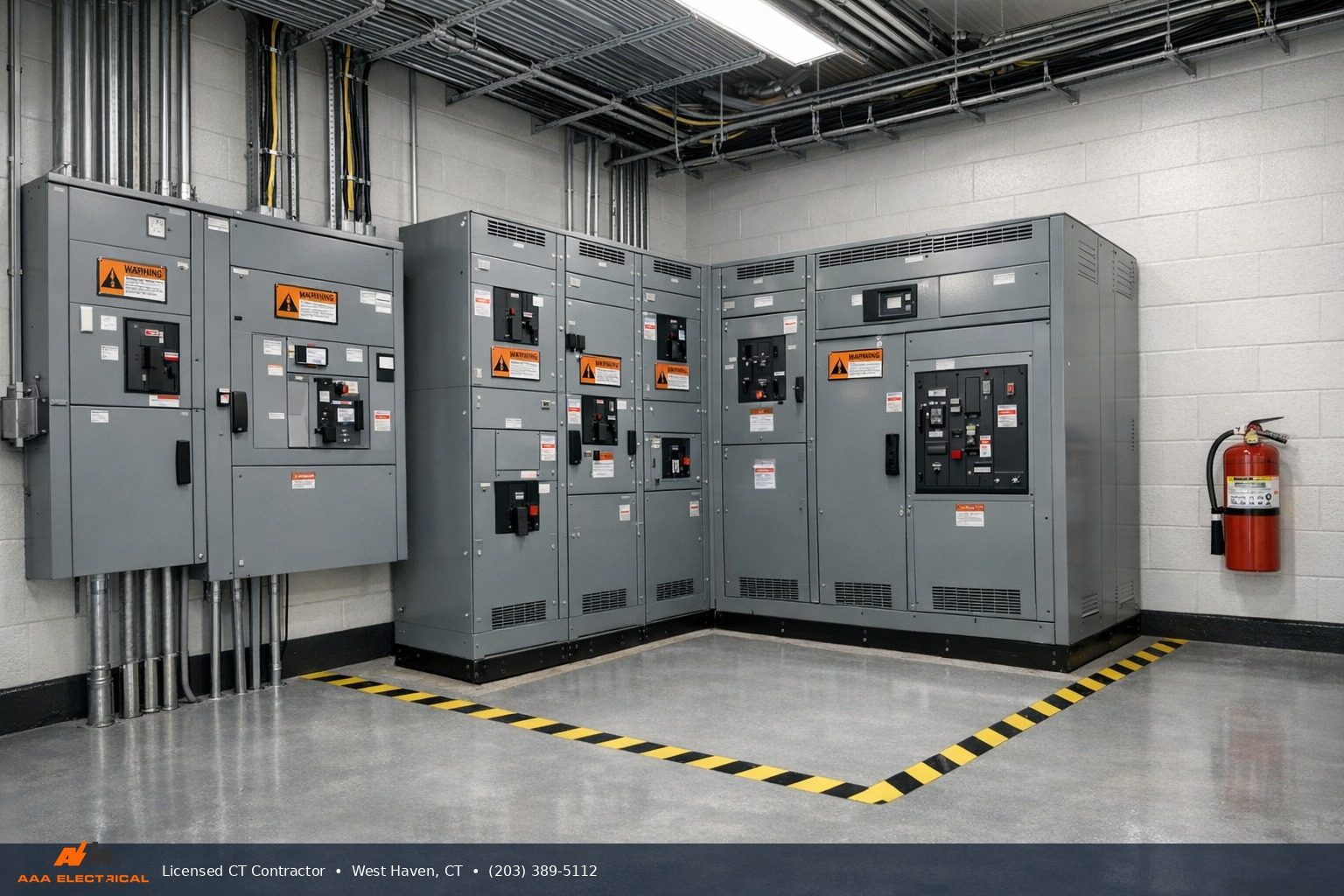
If you manage a commercial building, industrial facility, or multi-tenant property in Connecticut, the 2023 edition of NFPA 70B directly affects you. What was previously a recommended practice is now a mandatory standard — and infrared thermographic inspections are at the center of the new requirements.
This guide covers what changed, what's required, how it affects your insurance, and what you need to do to get compliant.
What Changed in NFPA 70B 2023
The biggest shift: NFPA 70B moved from a "recommended practice" (RP) to a full standard. That means the language changed from "should" to "shall." For building owners and facility managers, this is the difference between a suggestion and a requirement.
Key changes that affect commercial properties in Connecticut:
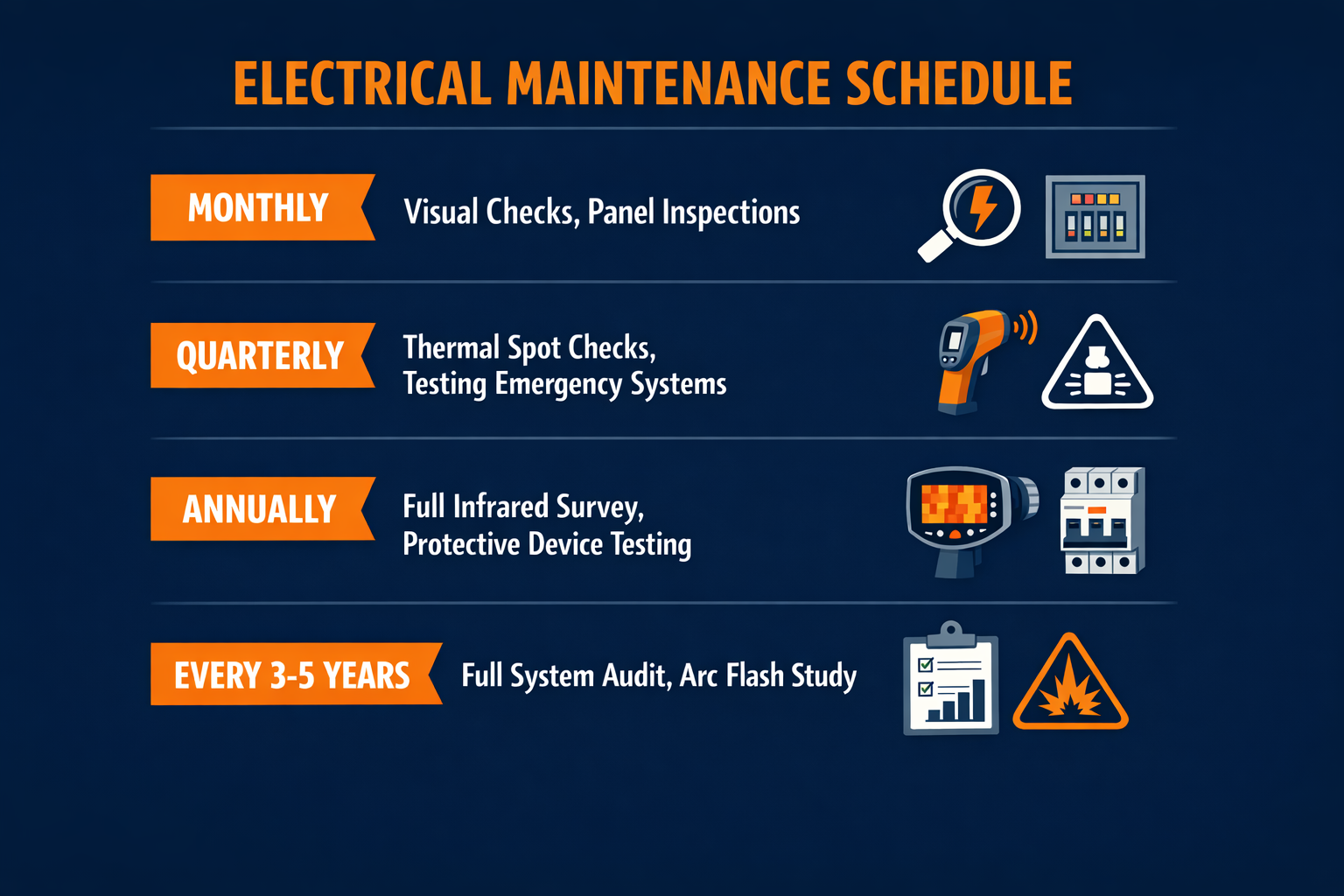
- Annual infrared inspections are mandatory for all commercial electrical equipment — switchgear, panels, motor control centers, transformers, disconnects, and bus duct.
- Equipment in poor condition or critical applications requires inspections every 6 months.
- New equipment must be baselined with an infrared scan within the first year of operation.
- Inspection reports must include thermal images, temperature data, severity classifications, and recommended corrective actions.
- Qualified personnel requirements — inspections must be performed by individuals with demonstrated competency in infrared thermography.
Who Does This Apply To?
NFPA 70B applies to the maintenance of electrical equipment in commercial and industrial facilities. In practical terms, if your building has any of the following, you're in scope:
| Equipment Type | Inspection Frequency | Notes |
|---|---|---|
| Main switchgear | Annual minimum | 6 months if equipment age >20 years |
| Distribution panels | Annual minimum | Include all sub-panels |
| Motor control centers | Annual minimum | 6 months for critical process motors |
| Transformers | Annual minimum | Both dry-type and oil-filled |
| Bus duct / busway | Annual minimum | All accessible connection points |
| Transfer switches | Annual minimum | Including generator connections |
| Disconnects & contactors | Annual minimum | All sizes and voltage levels |
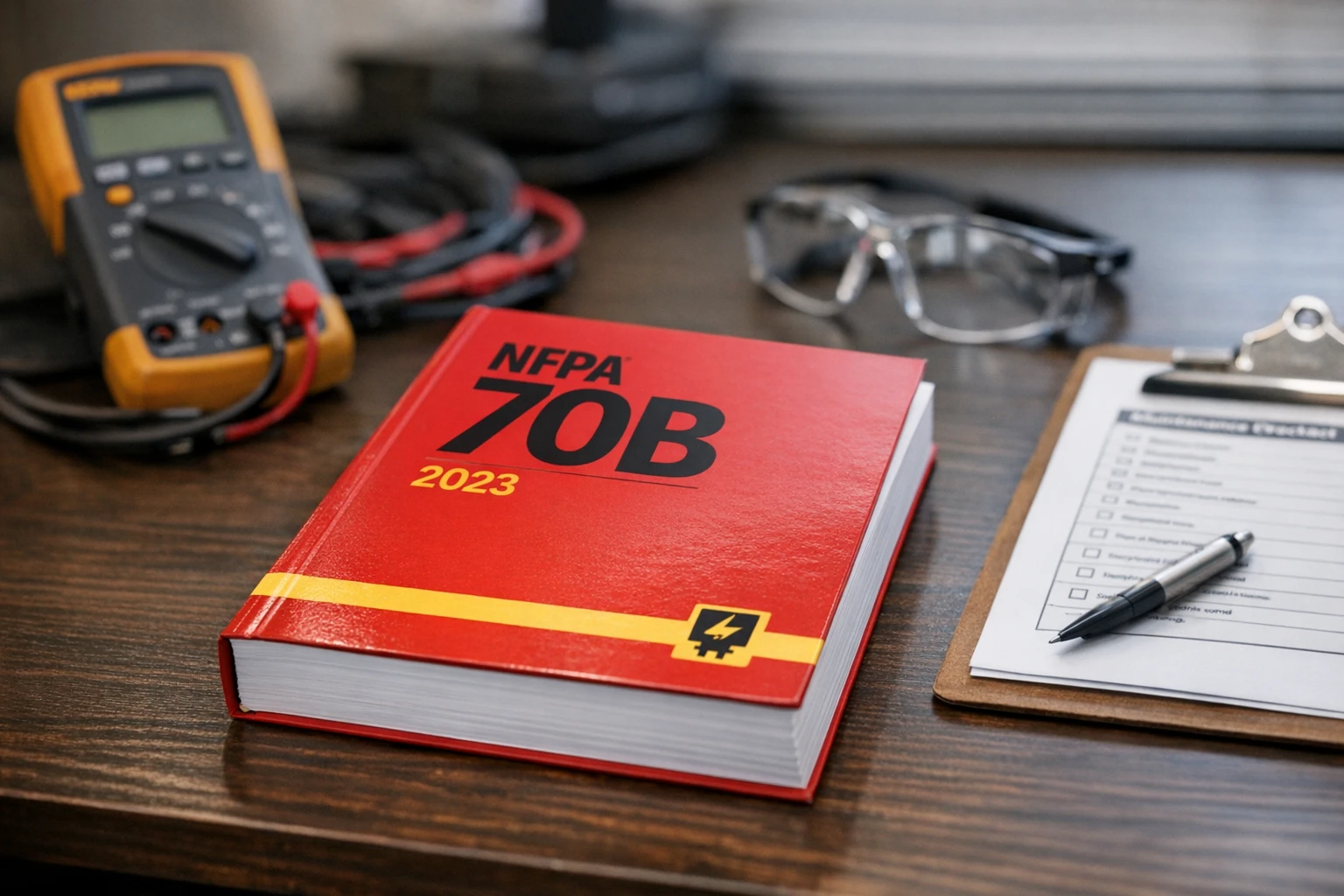
Professional-grade infrared cameras are required for NFPA 70B compliant inspections
This includes: office buildings, retail spaces, restaurants, warehouses, manufacturing plants, medical offices, schools, churches, multi-family residential buildings with central electrical systems, and any facility with 3-phase power.
How This Affects Your Insurance
Connecticut insurance carriers are paying close attention to NFPA 70B. Here's what we're seeing in the market:
Premium Discounts
Several carriers now offer premium reductions for commercial properties that maintain current infrared inspection reports. The discount varies, but even a small percentage on a commercial policy can more than offset the cost of annual testing.
Coverage Requirements
Some insurers are beginning to require infrared testing as a condition of coverage renewal — particularly for older buildings, buildings with a history of electrical issues, or properties with high-value contents or operations.
Claims Defense
If an electrical fire occurs, one of the first questions the insurance adjuster will ask is whether the building had current electrical maintenance records. An up-to-date infrared inspection report demonstrates due diligence. The absence of one raises questions about negligence.
What a Compliant Inspection Looks Like
Not all infrared inspections are created equal. To meet NFPA 70B requirements, an inspection must include:
- Full-load scanning — equipment must be inspected while operating under normal or near-normal load conditions. An inspection on an unloaded system misses the heat signatures that indicate problems.
- Calibrated thermal camera — consumer-grade thermal cameras don't meet the resolution or accuracy requirements. Professional-grade cameras with documented calibration are required.
- Severity classification — findings must be categorized by severity level, with corresponding recommended timeframes for corrective action.
- Detailed reporting — each finding documented with thermal image, reference image, temperature delta, location description, and recommended repair.
- Qualified inspector — the person performing the inspection must have demonstrated competency. Having a licensed electrician perform the scan adds significant value because they can diagnose the underlying cause, not just identify the hot spot.
What Happens If You Don't Comply
NFPA 70B doesn't carry direct legal penalties in the same way that building codes do. However, the practical consequences of non-compliance are significant:
- Insurance exposure — your carrier may deny a claim or reduce coverage if you can't demonstrate compliance with recognized maintenance standards.
- Liability risk — in a lawsuit following an electrical fire or injury, non-compliance with NFPA 70B can be used to establish negligence.
- AHJ enforcement — local authorities having jurisdiction (AHJs) in Connecticut can reference NFPA 70B during inspections and code enforcement actions.
- Tenant and occupant safety — if you're leasing space, you have a duty of care to your tenants. Documented electrical maintenance is part of that obligation.
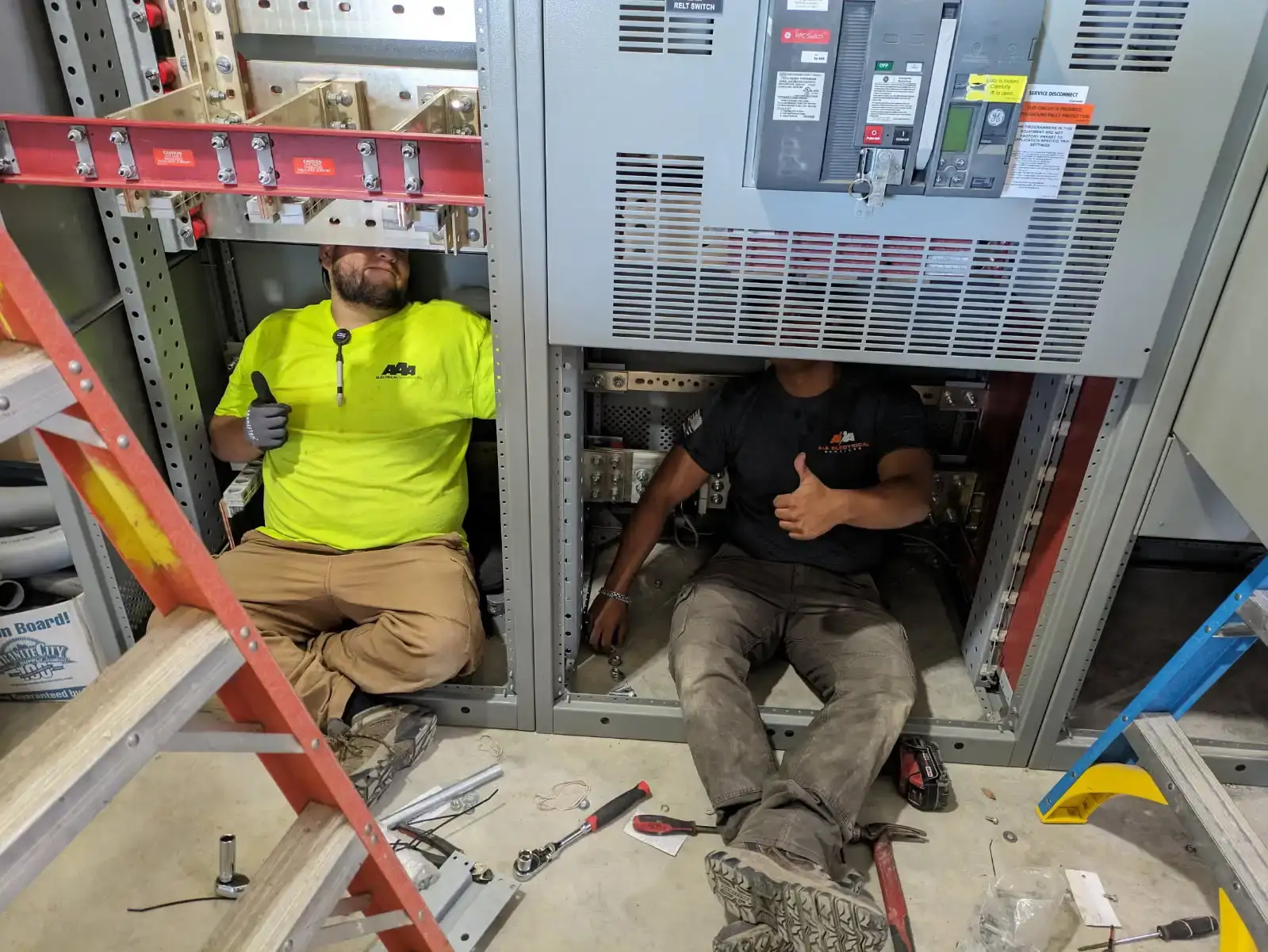
All commercial electrical panels require documented annual infrared inspections
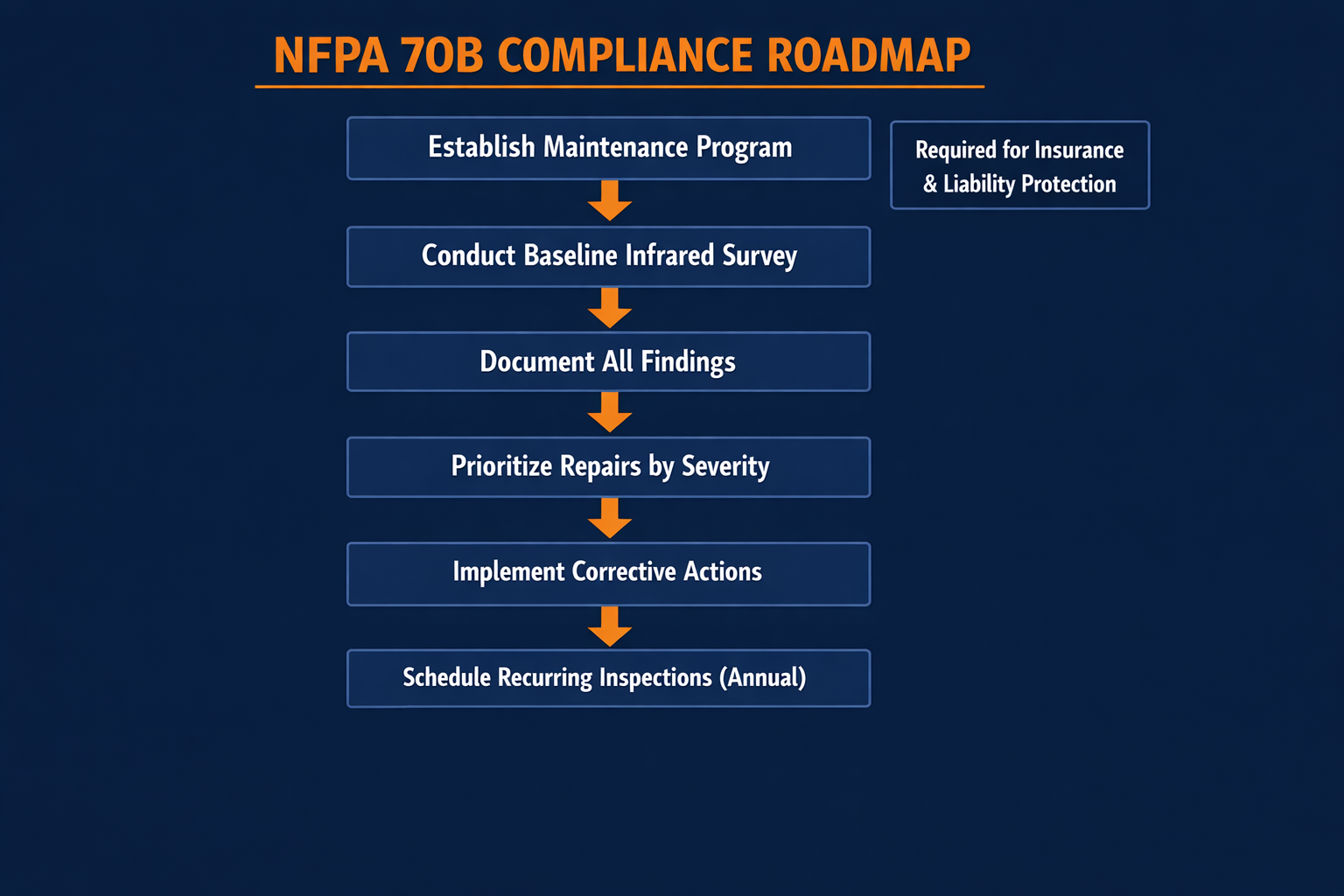
Getting Compliant: Step by Step
Step 1: Schedule Your Baseline Inspection
If you've never had an infrared inspection, the first step is establishing a baseline. This gives you a complete picture of your electrical system's current condition and identifies any immediate issues that need attention.
Step 2: Address Critical Findings
Any findings classified as critical or serious should be repaired promptly. The advantage of having a licensed electrician perform your infrared scan is that we can often diagnose and repair issues during the same visit — retorquing connections, replacing failing breakers, rebalancing loads.
Step 3: Establish an Annual Schedule
Set a recurring annual inspection date. Many facility managers tie it to their insurance renewal cycle so the report is always current when the carrier asks for it.
Step 4: Maintain Records
Keep all inspection reports, repair documentation, and correspondence with your insurance carrier. These records are your evidence of compliance and due diligence.
Get NFPA 70B Compliant
Licensed electricians performing infrared inspections across New Haven and Fairfield counties.
Insurance-ready reports. Same-day scheduling available.
Related Services
Find Your Town
We provide infrared testing and NFPA 70B compliance services across southern Connecticut: