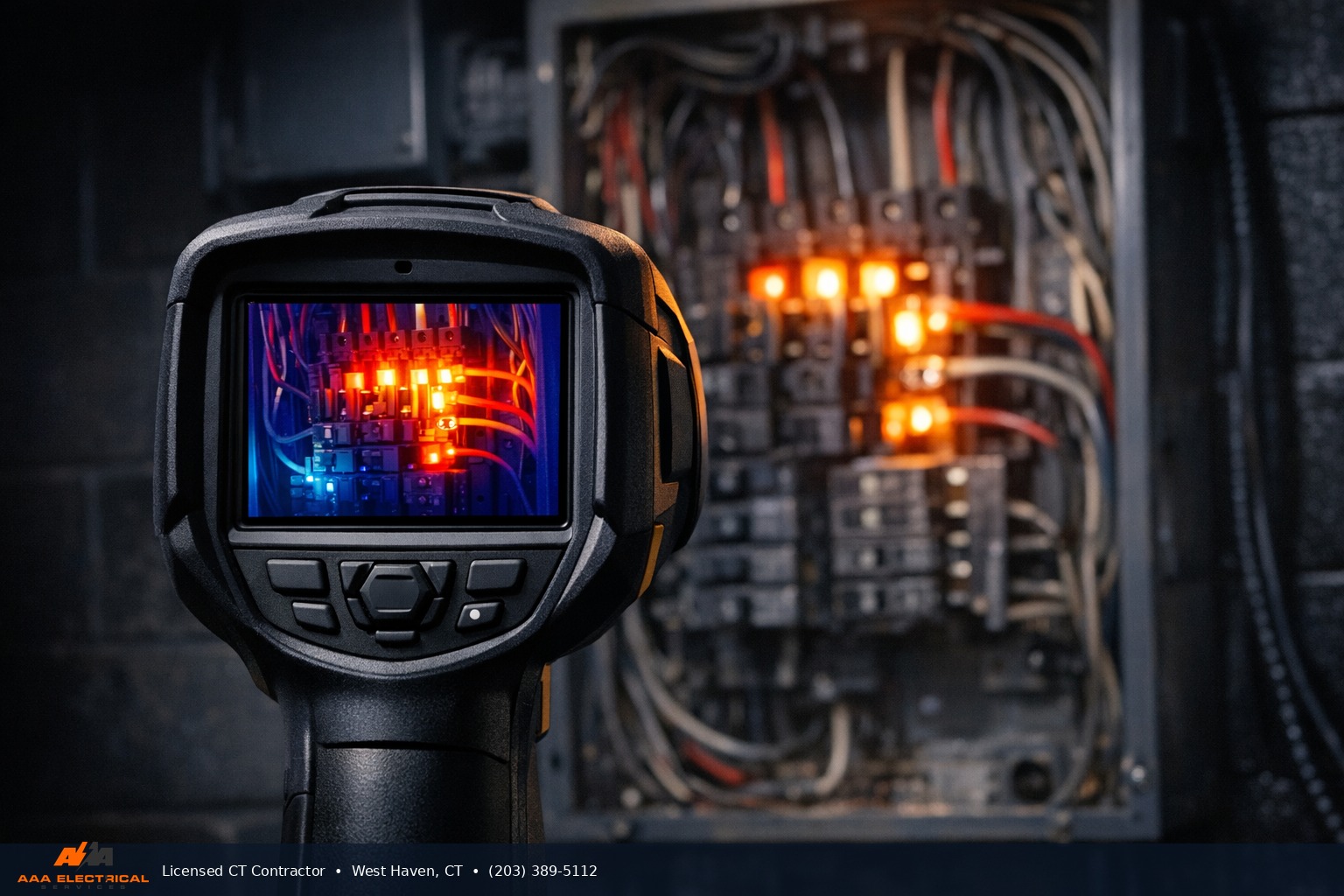
Every year, electrical fires cause an estimated $1.3 billion in property damage across the United States. For commercial building owners and facility managers in Connecticut, an electrical fire doesn't just mean property loss — it means business interruption, liability exposure, and potential harm to employees and tenants.
The worst part? Most electrical fires are preventable. The conditions that cause them — loose connections, overloaded circuits, corroded breakers, failing components — all generate excess heat long before they ignite. And that heat is exactly what infrared thermographic testing is designed to detect.
What Causes Electrical Fires in Commercial Buildings
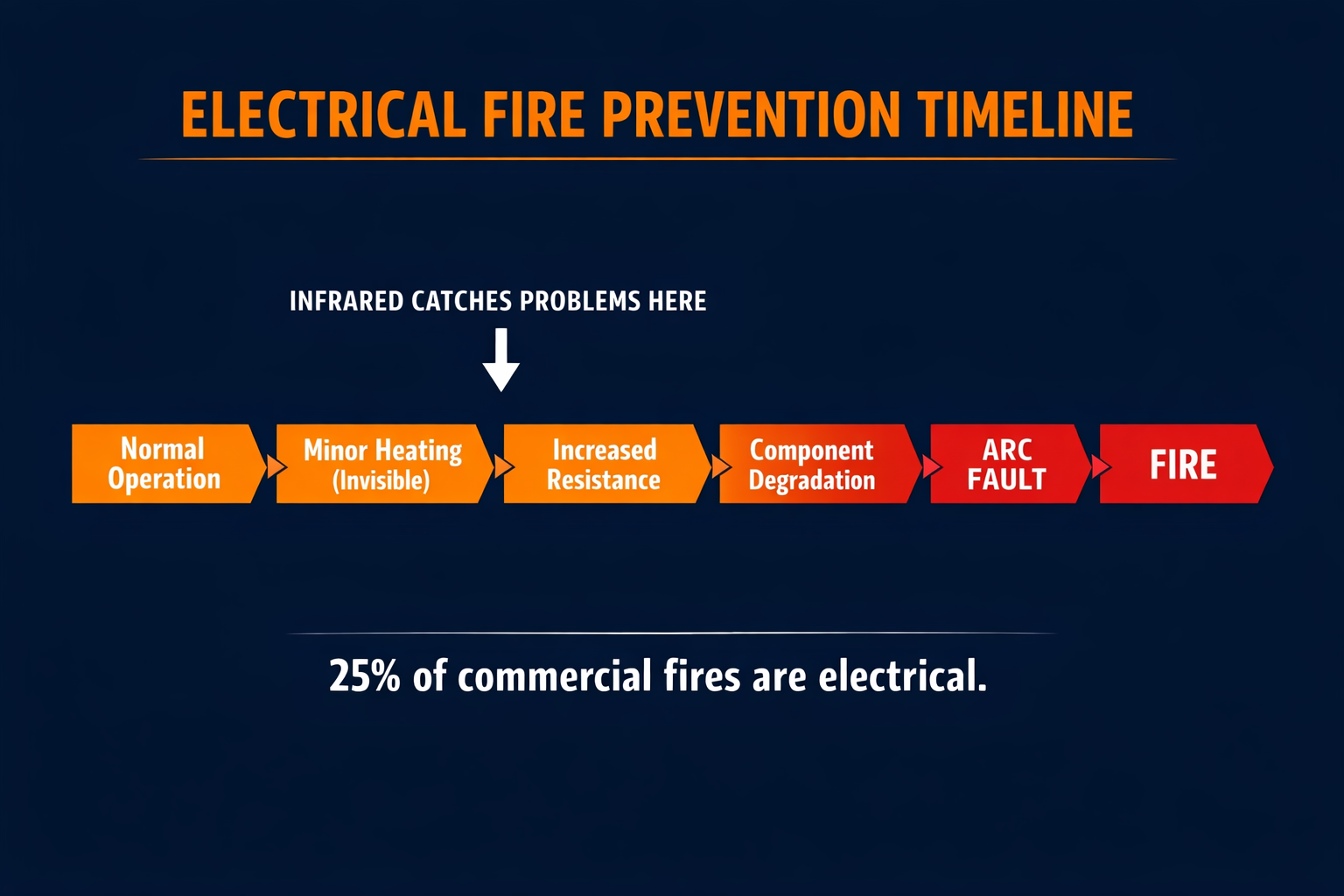
Electrical fires don't happen randomly. They follow a predictable pattern: a component degrades, resistance increases, heat builds up, insulation breaks down, and eventually something ignites. The most common causes in commercial buildings include:
Loose Connections
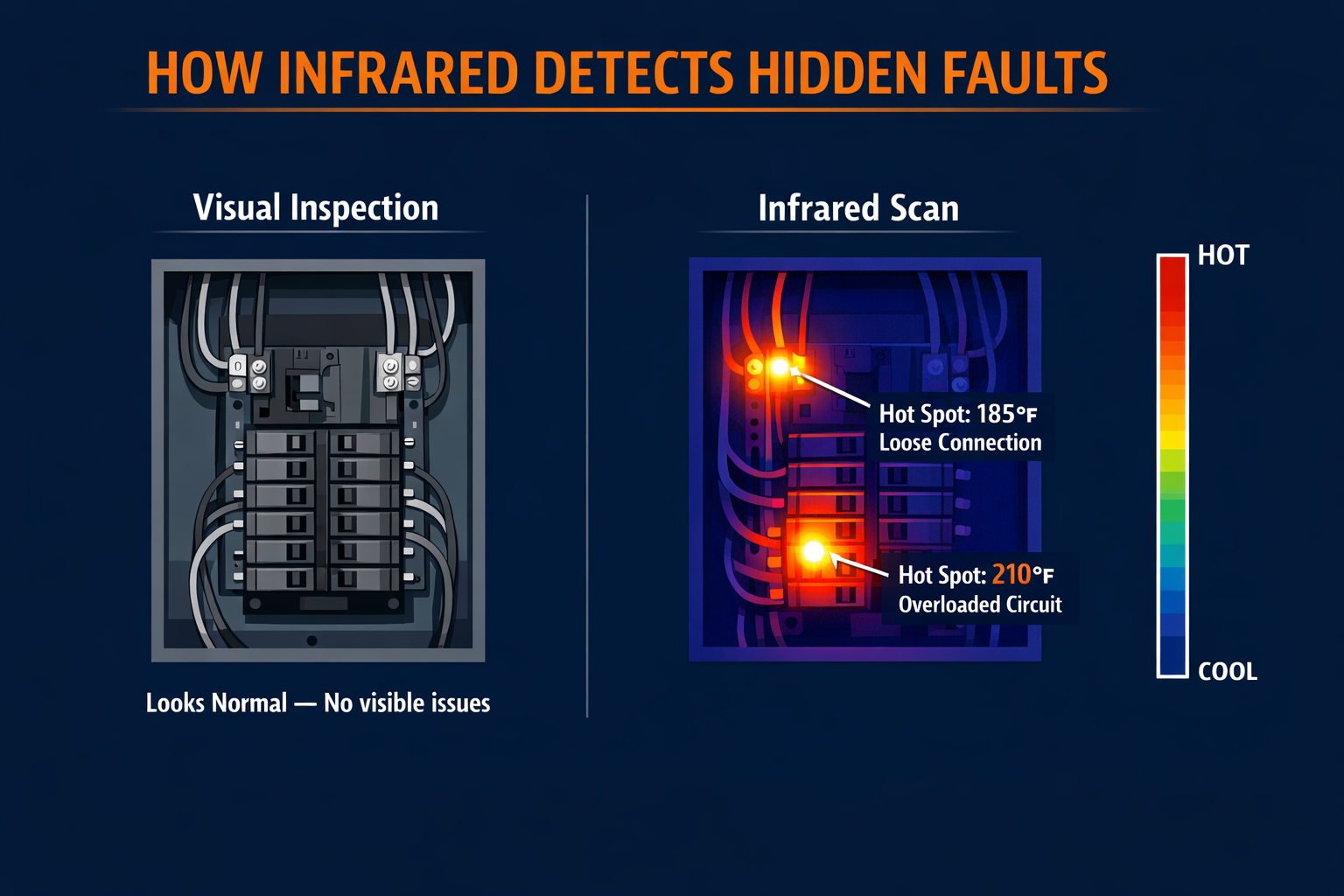
Vibration, thermal cycling, and simple age cause electrical connections to loosen over time. A loose connection increases electrical resistance at that point, which generates heat. Left unchecked, the connection gets hotter, the insulation around it degrades, and the risk of arc flash or fire climbs steadily. This is the single most common finding during infrared scans.
Overloaded Circuits
As businesses grow, they add equipment — HVAC units, server racks, production machinery — often without upgrading the electrical infrastructure to match. Circuits carrying more current than they were designed for run hot. Breakers that should trip sometimes don't, especially if they're older or haven't been maintained.
Aging Equipment
Circuit breakers, contactors, disconnects, and transformers all have service lives. A 30-year-old electrical panel doesn't fail all at once — it degrades gradually. Internal components corrode, springs weaken, contacts pit. Each degradation point becomes a heat source that an infrared camera can see.
Harmonics and Power Quality Issues
Modern electronic equipment — variable frequency drives, LED lighting, computer systems — introduces harmonic distortion into the electrical system. Harmonics cause excess heating in conductors, transformers, and neutral wires. This heating is invisible to the naked eye but shows up clearly on a thermal scan.
How Infrared Testing Catches Problems Early
An infrared thermographic inspection uses a calibrated thermal camera to scan every accessible electrical component while your system is under normal load. No shutdown required. No disruption to your operations.
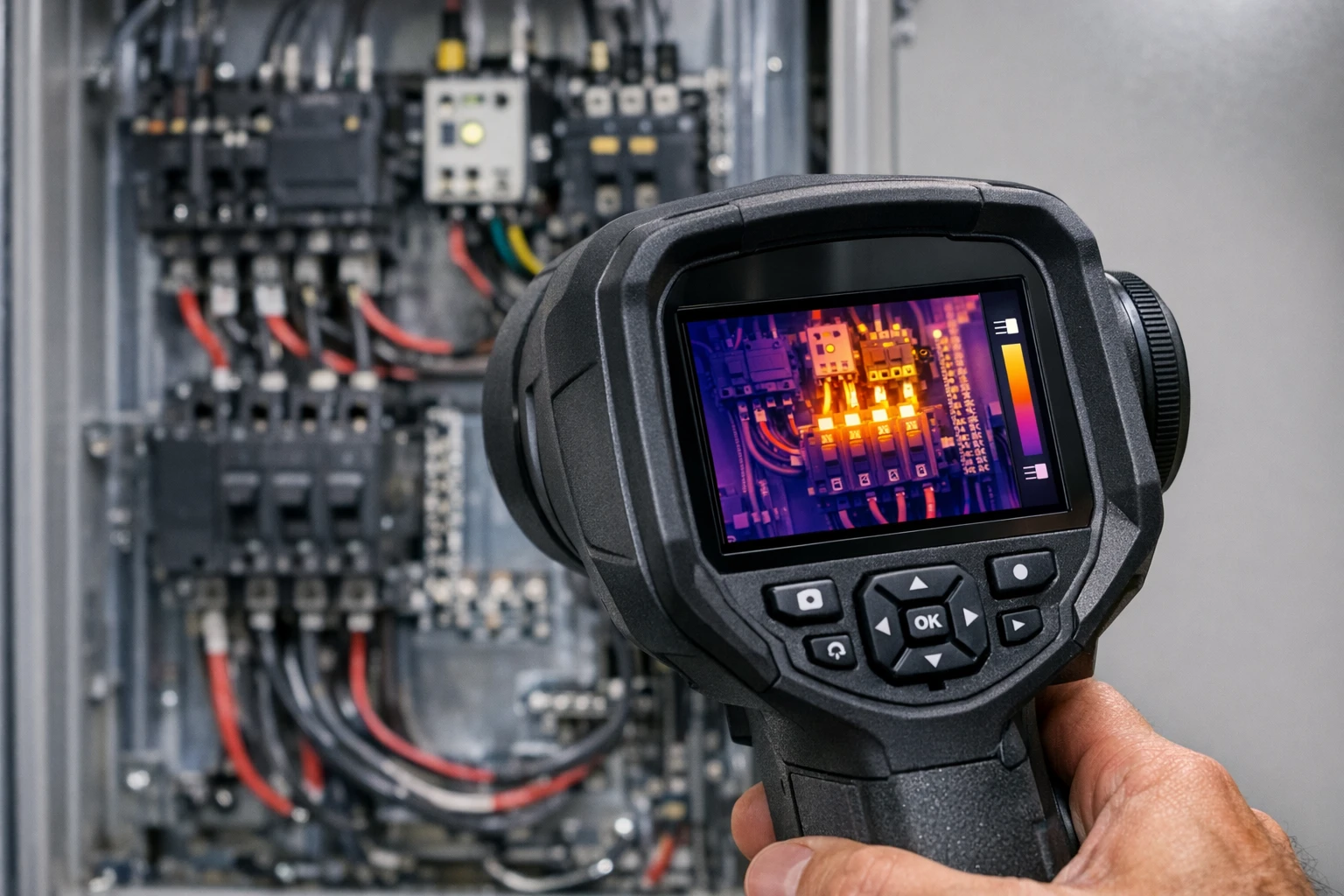
FLIR thermal camera scanning an electrical panel for dangerous hot spots
The camera sees heat patterns that are invisible to the human eye. A connection running 40°F hotter than an identical connection next to it is a clear warning sign. A breaker that's significantly warmer than the others in the same panel is telling you something is wrong.
During a typical commercial inspection, we scan:
- Main switchgear and distribution panels
- Circuit breaker panels and sub-panels
- Motor control centers
- Transformers and disconnects
- Bus duct and cable connections
- Transfer switches and generator connections
Every anomaly gets documented with a thermal image, temperature reading, severity rating, and recommended corrective action. The result is a detailed report that gives you — and your insurance carrier — a clear picture of your electrical system's health.
NFPA 70B: Why Annual Testing Is Now Required
The 2023 edition of NFPA 70B changed from a recommended practice to a mandatory standard. Among the key requirements: infrared thermographic inspections must be performed at least once every 12 months on all commercial electrical equipment. Equipment in poor condition or serving critical applications should be inspected every 6 months.
This isn't just a code requirement — it's a liability shield. If an electrical fire occurs and you can show that you've been performing annual infrared inspections and addressing the findings, you're in a fundamentally different position than a building owner who hasn't tested in years.
Many Connecticut insurance carriers are already requiring or incentivizing regular infrared testing. Some offer premium discounts for buildings with current inspection reports. Others are making it a condition of coverage renewal for older commercial properties.
Real-World Prevention: What We Find on Inspections
In our 17+ years performing infrared inspections across New Haven and Fairfield counties, we've seen the same patterns repeat across commercial properties:
A manufacturing facility in Milford had a 200A breaker running 85°F above ambient — hot enough to melt the insulation within weeks. The connection was retorqued and the problem was solved in 20 minutes. Without the scan, that breaker was on track to fail catastrophically.
Common findings that prevent fires include: loose lug connections on main feeders, unbalanced phase loads causing neutral conductor heating, pitted contactor tips in motor starters, corroded bus bar connections in older switchgear, and undersized conductors that were adequate when installed but can't handle the current load today.
Every one of these findings is a fire waiting to happen. Every one of them is fixable once you know it's there.
The Cost of Not Testing
An infrared inspection for a typical commercial building costs a fraction of what you'd spend on a single day of business interruption after a fire. Factor in property damage, liability claims, increased insurance premiums, and the time it takes to rebuild — and the math isn't even close.
Beyond the financial risk, there's a compliance risk. Without current infrared testing, you're out of step with NFPA 70B. That gap shows up in insurance audits, property inspections, and — worst case — in the investigation after an incident.
Schedule Your Infrared Inspection
NFPA 70B compliant. Insurance-ready reports. Zero downtime to your operations.
Serving all of New Haven and Fairfield counties.
Related Services
Find Your Town
We provide infrared electrical testing services across southern Connecticut. Find your town for local service information: