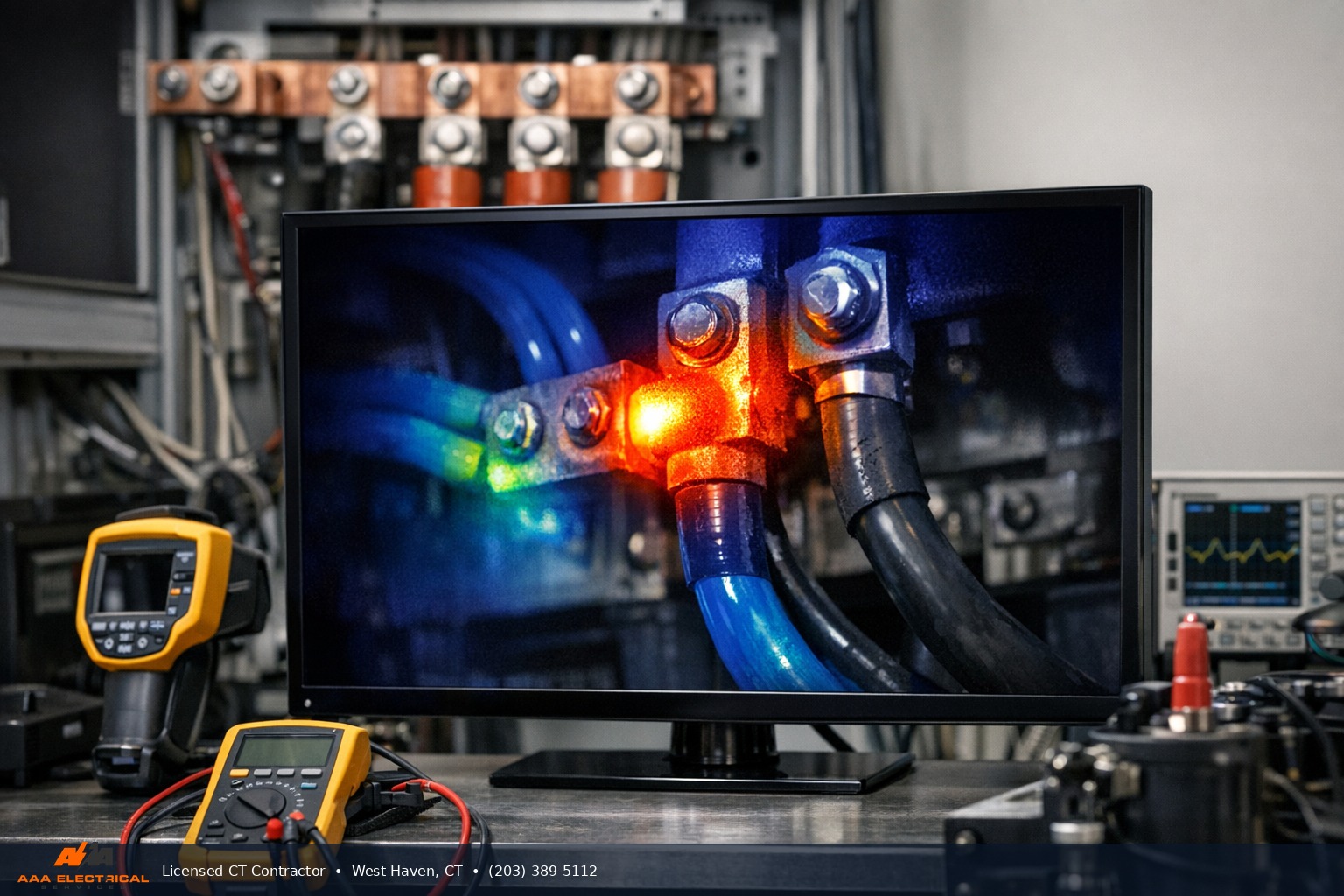
Most electrical problems get hot before they fail. A loose connection. A corroded breaker. An overloaded circuit. They all generate heat — sometimes long before you see sparks or smell smoke.
That's where infrared electrical inspection comes in. It's a diagnostic tool that uses a thermal imaging camera to see heat that's invisible to the naked eye. And it catches problems before they become fires.
How Does Infrared Testing Work?
We use a high-resolution infrared camera that detects infrared radiation (heat) coming off electrical components. The camera displays a thermal image — a color-coded map where hotter areas show up as bright orange or yellow, and cooler areas are blue or purple.
When we scan an electrical panel, a motor control center, or a disconnect, we're looking for temperature differences. If one breaker is 40 degrees hotter than the identical breaker next to it, there's a problem. Maybe it's a loose wire. Maybe it's corrosion. Either way, it's generating excess heat and it needs attention.
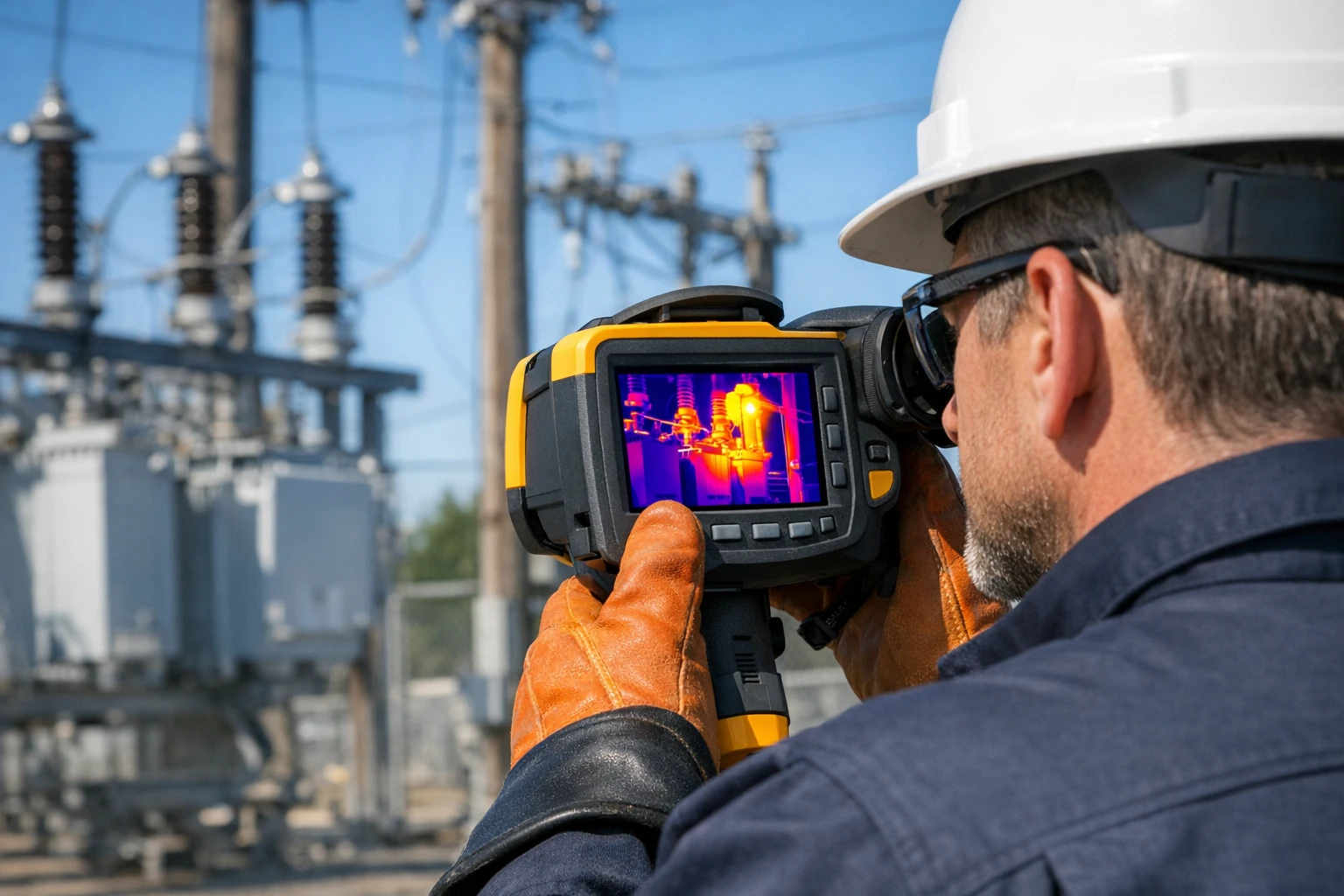
Professional-grade FLIR cameras detect temperature differences invisible to the naked eye
The beauty of infrared electrical inspection is that it's non-contact and non-invasive. We don't have to shut down your equipment or open anything up (in most cases). The camera sees through panel covers and enclosure doors. We can inspect live electrical systems while they're running under load — which is when problems show up.
What Problems Does Infrared Detect?
Here's what we find during a typical infrared scan:
Loose Connections
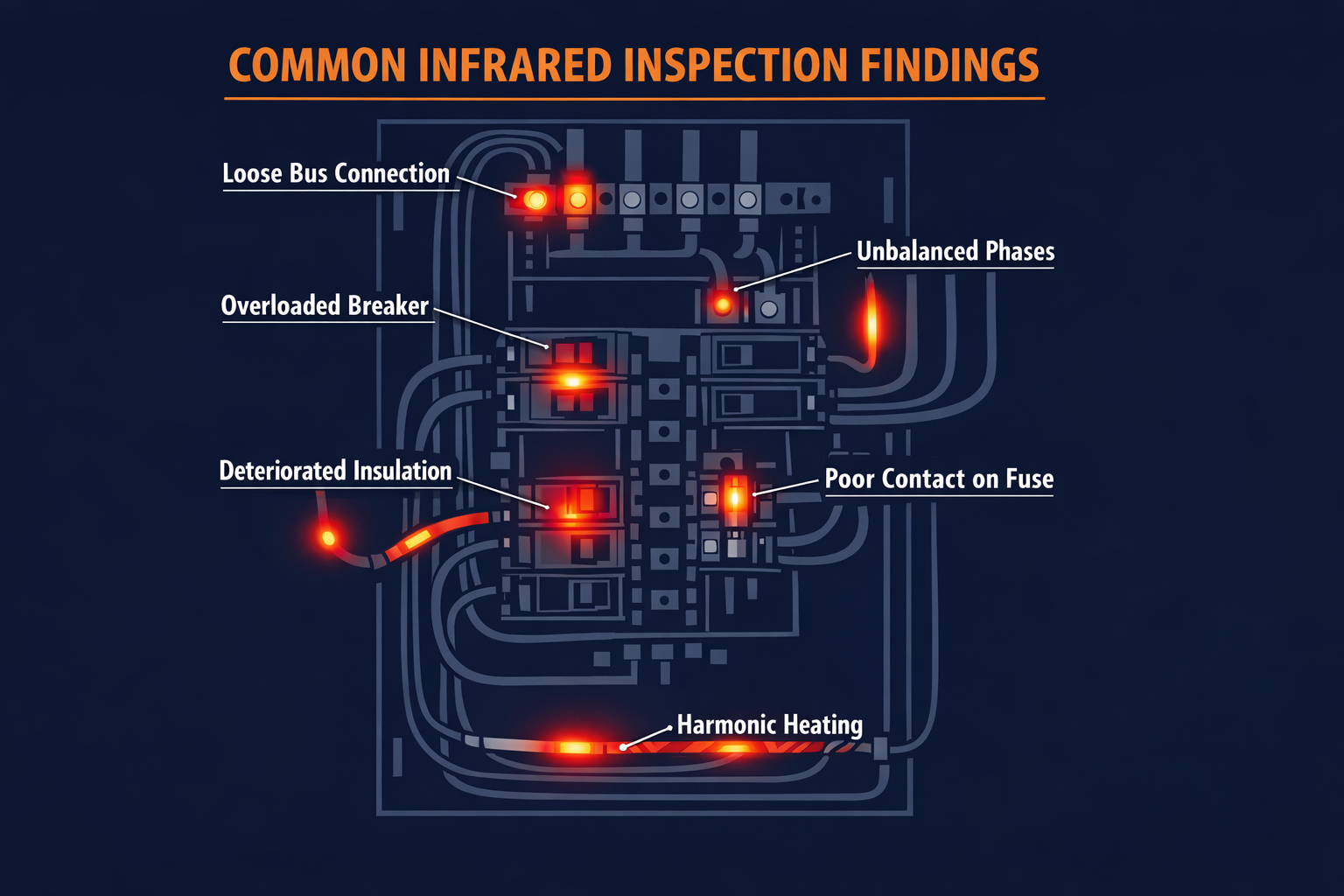
This is the #1 issue we catch. A wire that's not torqued down properly at a breaker, bus bar, or terminal creates resistance. Resistance generates heat. If it's bad enough, you'll see a hot spot 50–100 degrees above ambient temperature.
Loose connections happen over time as screws vibrate loose, or they happen during installation if someone doesn't tighten things to spec. Either way, they're a fire hazard. We catch them before they burn.
Overloaded Circuits
If a circuit is pulling more current than it's rated for, it heats up. Infrared shows us which breakers are running hot because they're overloaded. That tells you it's time to add circuits or balance the load.
This is especially common in commercial buildings where tenants add equipment without thinking about electrical capacity. Restaurants, medical offices, retail — we see it all the time.
Corroded Connections
Corrosion increases resistance, which increases heat. Here in Connecticut, coastal properties in Milford, Branford, and Guilford deal with salt air corrosion on panels, disconnects, and outdoor equipment. Infrared picks it up before the connection fails completely.
Failing Breakers
Circuit breakers wear out. Internal contacts degrade. When a breaker starts to fail, it runs hot. We see breakers that are 30–40 degrees hotter than they should be. That's your warning sign — replace it now, before it trips randomly or stops protecting the circuit.
Unbalanced Loads
In three-phase commercial systems, you want the load balanced across all three phases. If one phase is carrying twice the load of the other two, it's going to run hotter. Infrared shows us the imbalance so we can redistribute circuits and cool things down.
Bad Terminations
Anywhere wires connect — lugs, terminals, splices — there's potential for a bad connection. Infrared finds terminations that are heating up because they're loose, corroded, or undersized.
Who Needs Infrared Inspections?
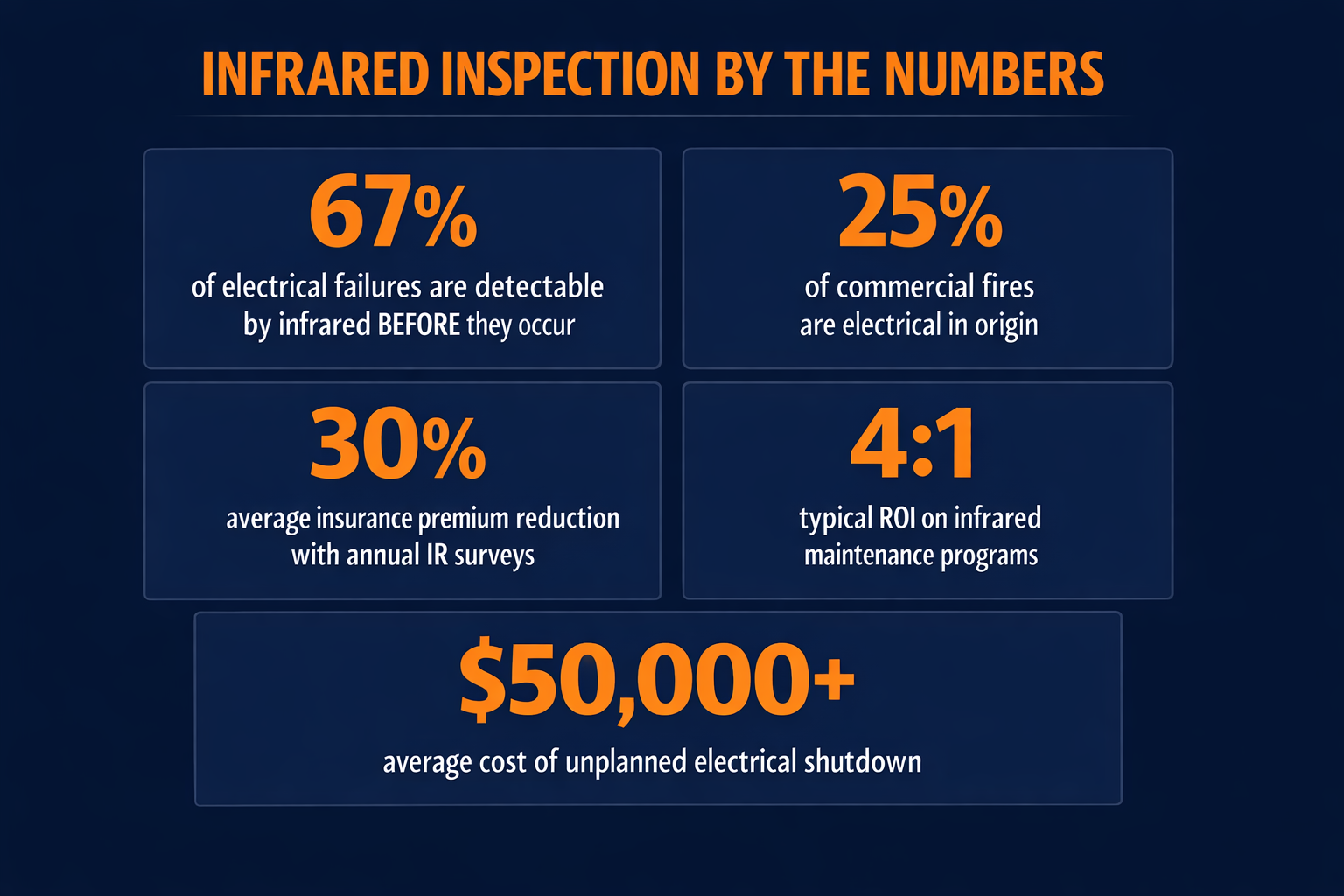
NFPA 70B (the electrical maintenance standard) recommends annual infrared inspections for commercial and industrial facilities. Insurance companies often require them. Some will give you a discount on your premium if you're doing regular scans.
For commercial properties, infrared testing is cheap insurance. You're spending a few hundred bucks to catch problems that could cost you tens of thousands in downtime, equipment damage, or fire loss.
Residential properties don't usually need infrared unless there's a specific concern — frequent breaker trips, flickering lights, burning smells. But if you're buying an older home, an infrared inspection as part of your home inspection can catch hidden electrical issues before you close.
When Should You Schedule an Infrared Scan?
The best time to scan electrical equipment is when it's under normal load. That means business hours for a commercial building, peak production for a manufacturing plant. We need to see how the system behaves when it's working hard.
For facilities with seasonal peaks (like HVAC load in summer), we recommend scanning during that peak period. That's when problems show up.
If you've never had an infrared scan done, now's a good time. If you have critical equipment — server rooms, refrigeration, medical equipment — you should be scanning annually.
What Happens After the Scan?
We give you a detailed report with thermal images, problem locations, severity ratings, and recommendations. High-priority issues (anything over 40°C above ambient) get flagged for immediate repair. Medium and low-priority issues get noted for the next maintenance cycle.
You get both the infrared image and a regular photo of each problem area so your maintenance team knows exactly where to look. We include temperature readings, load data, and repair recommendations.
Then it's up to you to schedule the repairs. We can handle them, or you can use your in-house team. Either way, you've got documentation of the problem and a clear action plan.
Why AAA Does Infrared Testing
We started offering infrared electrical inspections because we got tired of seeing electrical fires that could've been prevented. A $500 scan catches a $50,000 problem. It's a no-brainer.
We're certified thermographers with high-resolution FLIR cameras. We've scanned everything from 100-amp residential panels to 4,000-amp industrial switchgear. Licensed in Connecticut (CT #E1-0191759), insured, and we've been doing this since 2009.
If you manage a commercial building, own a manufacturing facility, or just want peace of mind about your home's electrical system, call 203-389-5112. We'll schedule a scan and show you what's really going on inside your panels.
Need Help With This?
AAA Electrical Services has been doing this work across Southern CT for 17+ years.
Call 203-389-5112Related Services
Find Your Town
We provide infrared electrical inspection services across southern Connecticut. Find your town for local service information: