What Is Structured Data Cabling?
Structured cabling is the backbone of modern network infrastructure. It's a standardized, organized approach to planning and installing data cables throughout a building — following TIA/EIA standards that ensure consistent performance, scalability, and long-term reliability.
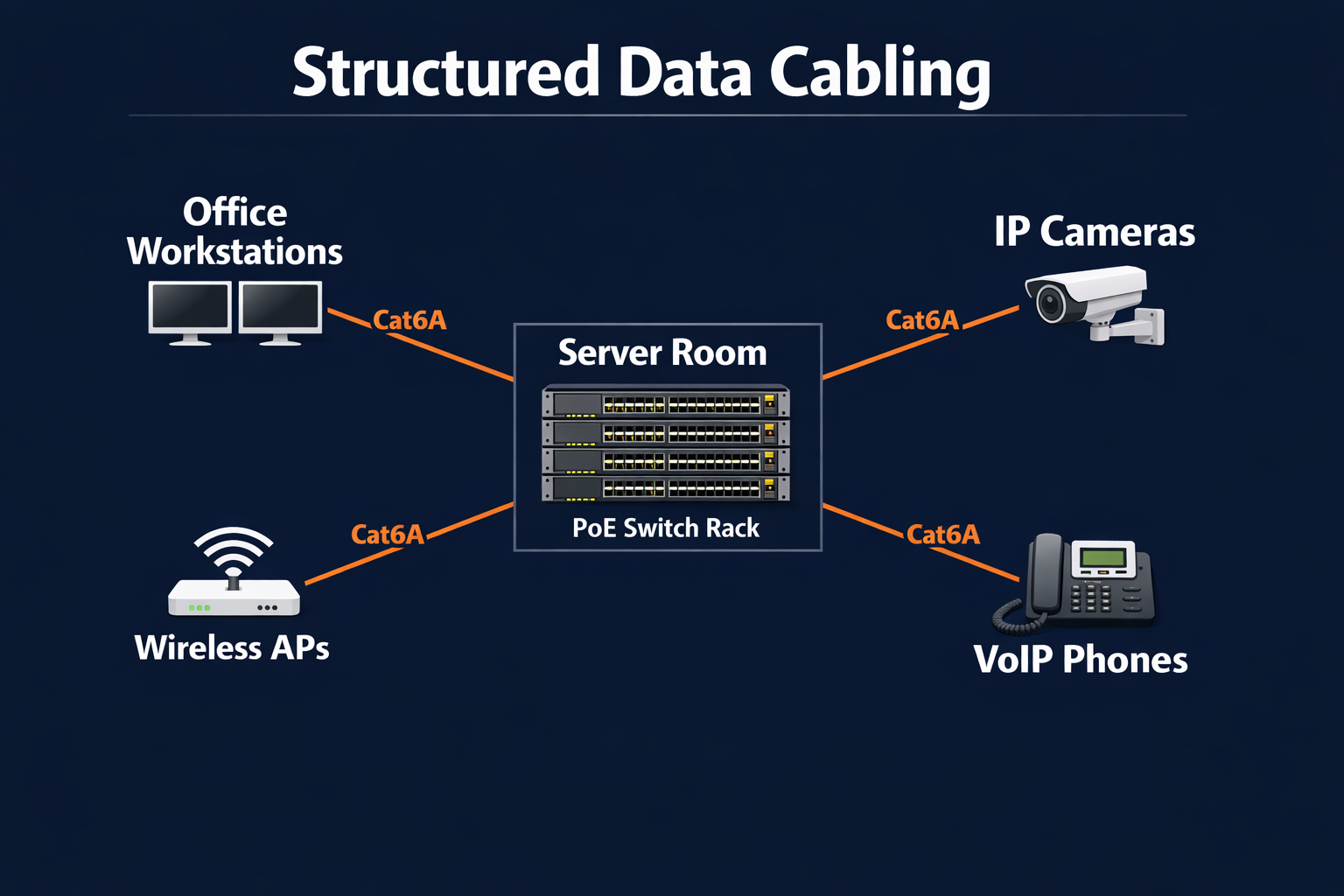
Unlike temporary or ad-hoc wiring where cables run wherever they fit, structured cabling uses a hierarchical design: backbone cables running between floors or buildings, distribution frames in central hubs, and drop cables running to individual workstations and access points. This organization makes it easy to add, move, or troubleshoot equipment without tearing out walls or reconfiguring entire systems.
Whether you're wiring a new office, expanding a warehouse, or upgrading an aging network infrastructure, structured cabling gives you a solid foundation for growth. Systems we install are rated to perform for 10-15+ years without major changes.
Our Data Cabling Services
Cat6 and Cat6A Installation
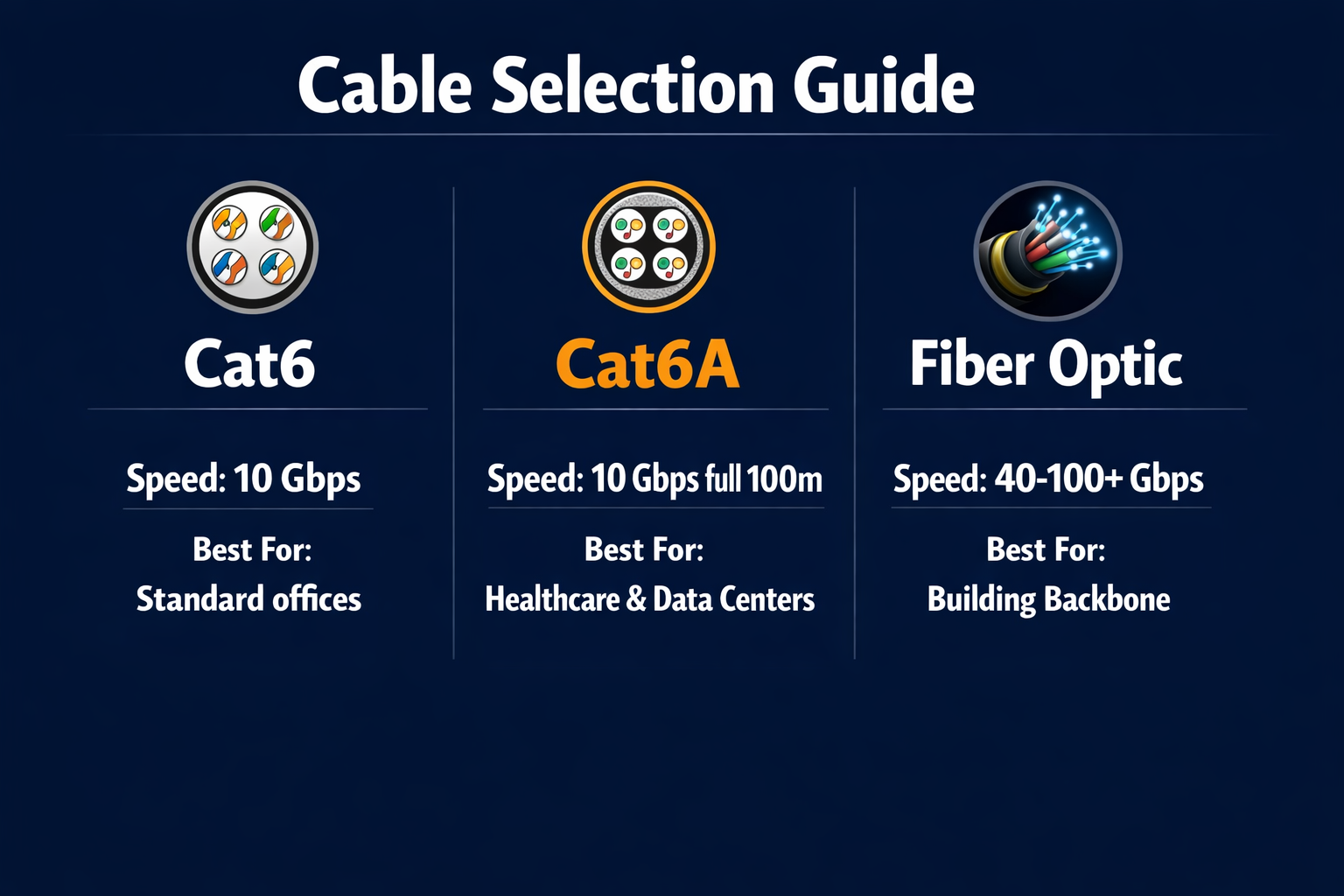
We install and terminate copper cabling to meet your current and future bandwidth needs. Cat6 supports 10 Gbps and provides solid shielding against interference — it's the standard for most commercial offices today. Cat6A pushes 10 Gbps to the full 100-meter cable distance with superior crosstalk protection, ideal for high-bandwidth environments like healthcare facilities, media production, and data centers.
We terminate all cables to industry standards (568A/568B) and label every run for easy identification and future maintenance.
Fiber Optic Cabling
For long-distance backbone runs between buildings or within large facilities, single-mode or multi-mode fiber optic cable provides unlimited bandwidth and complete immunity to electromagnetic interference. We handle fiber installation from the initial site survey through final testing with optical equipment. Fiber is ideal for campuses, industrial facilities with high electrical noise, and future-proofing your network infrastructure.
Patch Panel and Rack Installation
We design and build custom network racks with patch panels, cable management, and equipment mounting. Proper patch panel setup keeps your network organized and lets you make changes without touching the permanent cabling infrastructure. We mount switches, routers, patch panels, and other equipment with proper cable routing and labeling.
Cable Tray and Pathway Management
Proper cable management protects your cabling investment and keeps pathways clear for maintenance and future upgrades. We install cable trays for overhead runs, conduit for in-wall or underground runs, floor-mounted raceways, and cable management systems tailored to your building layout and equipment locations.
Cable Testing and Certification
We test all installations with a Fluke cable certification tester. Every run is verified for proper termination, signal integrity, and compliance with TIA/EIA standards. Certification documents the performance of your system and provides proof of workmanship — important for warranty claims, audits, and troubleshooting down the road. Testing catches installation issues before they cause network outages.
Industries We Serve
Every modern business needs reliable network infrastructure. We've installed data cabling systems in:
- Office Buildings & Corporate Campuses — Cat6 or Cat6A networks supporting VoIP phones, video conferencing, and high-speed internet connectivity across multiple floors.
- Medical Facilities & Hospitals — HIPAA-compliant cabling for Electronic Health Records (EHR) systems, imaging networks, and secure data transmission.
- Warehouses & Logistics — Robust cabling infrastructure for warehouse management systems, inventory tracking, and real-time monitoring across large spaces.
- Retail & Point-of-Sale Networks — Distributed cabling for POS terminals, security cameras, inventory systems, and guest WiFi access points.
- Schools & Universities — Campus-wide fiber backbone with classroom and lab drops supporting student and staff connectivity.
- Manufacturing & Industrial Facilities — Shielded cabling and fiber backbone to handle electrical noise while supporting industrial IoT, machine monitoring, and production systems.
- Restaurants & Hospitality — Network cabling for POS systems, kitchen displays, guest WiFi, and back-of-house operations.
Why Structured Cabling Over Wireless?
Wireless networks are convenient, but they have limits. Structured cabling remains the backbone of enterprise networks for good reasons:
- Reliability & Uptime — Wired connections don't drop or suffer from interference. Critical operations run on copper or fiber, not radio waves.
- Speed & Bandwidth — Cabled networks deliver consistent gigabit or multi-gigabit speeds. Wireless is shared bandwidth that degrades with distance, walls, and interference.
- Security — Wired networks are harder to intercept. No SSID broadcast, no wireless signal to crack — tighter physical and logical security controls.
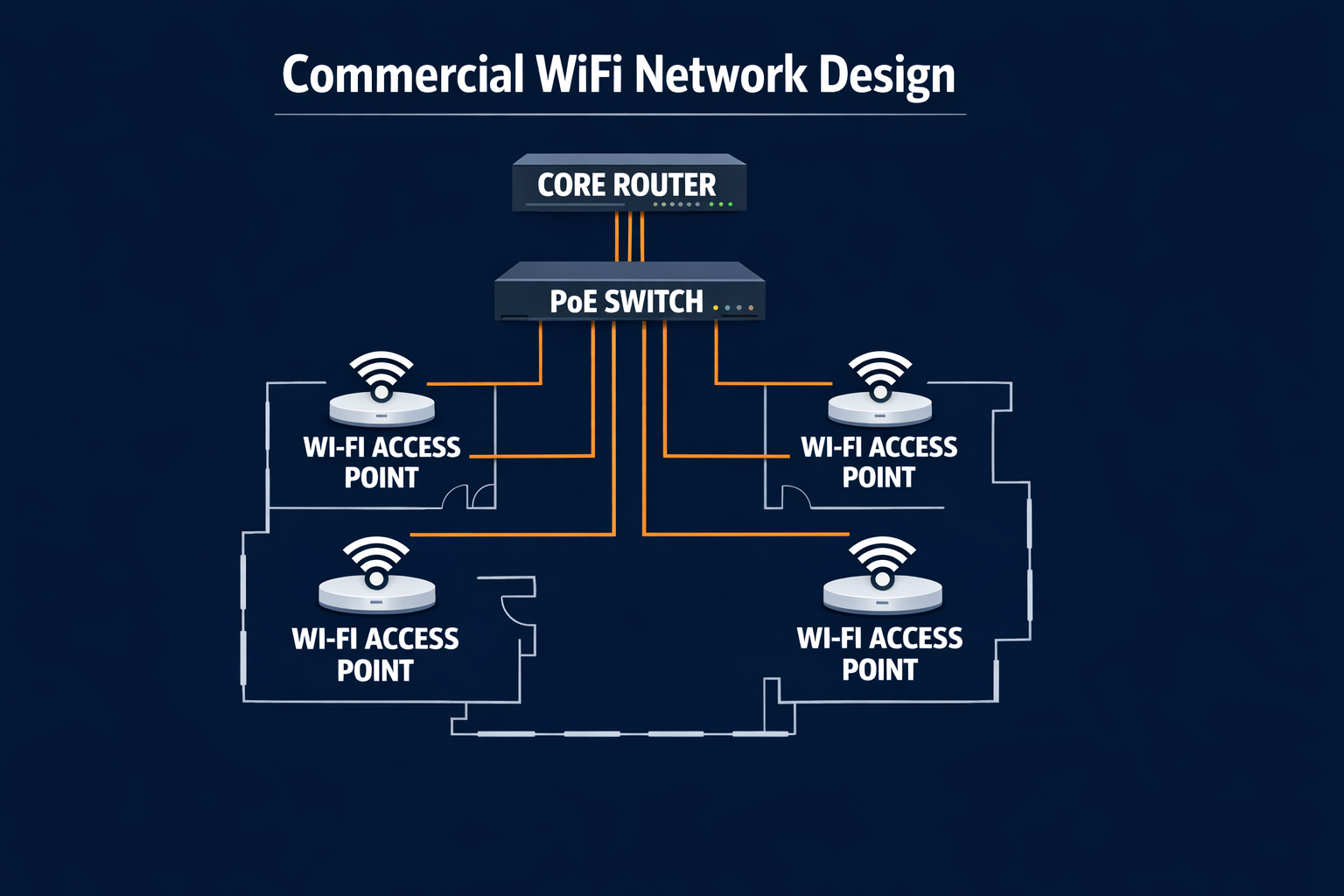
- Power over Ethernet (PoE) — Structured cabling can deliver power and data through the same cable. Security cameras, wireless APs, IP phones, and LED fixtures all powered from the network infrastructure.
- Scalability — Cabling infrastructure scales easily. Add drops, extend runs, upgrade equipment — wireless capacity is fixed by the AP hardware.
The answer isn't wireless OR wired — it's both. Most modern deployments use a strong wired backbone with wireless APs for mobility and convenience. We design systems that support both.
Need Structured Data Cabling?
Licensed CT electricians serving New Haven and Fairfield counties since 2009.
CT License E1-0191759 • BBB A+ Rated • 17+ years experience.