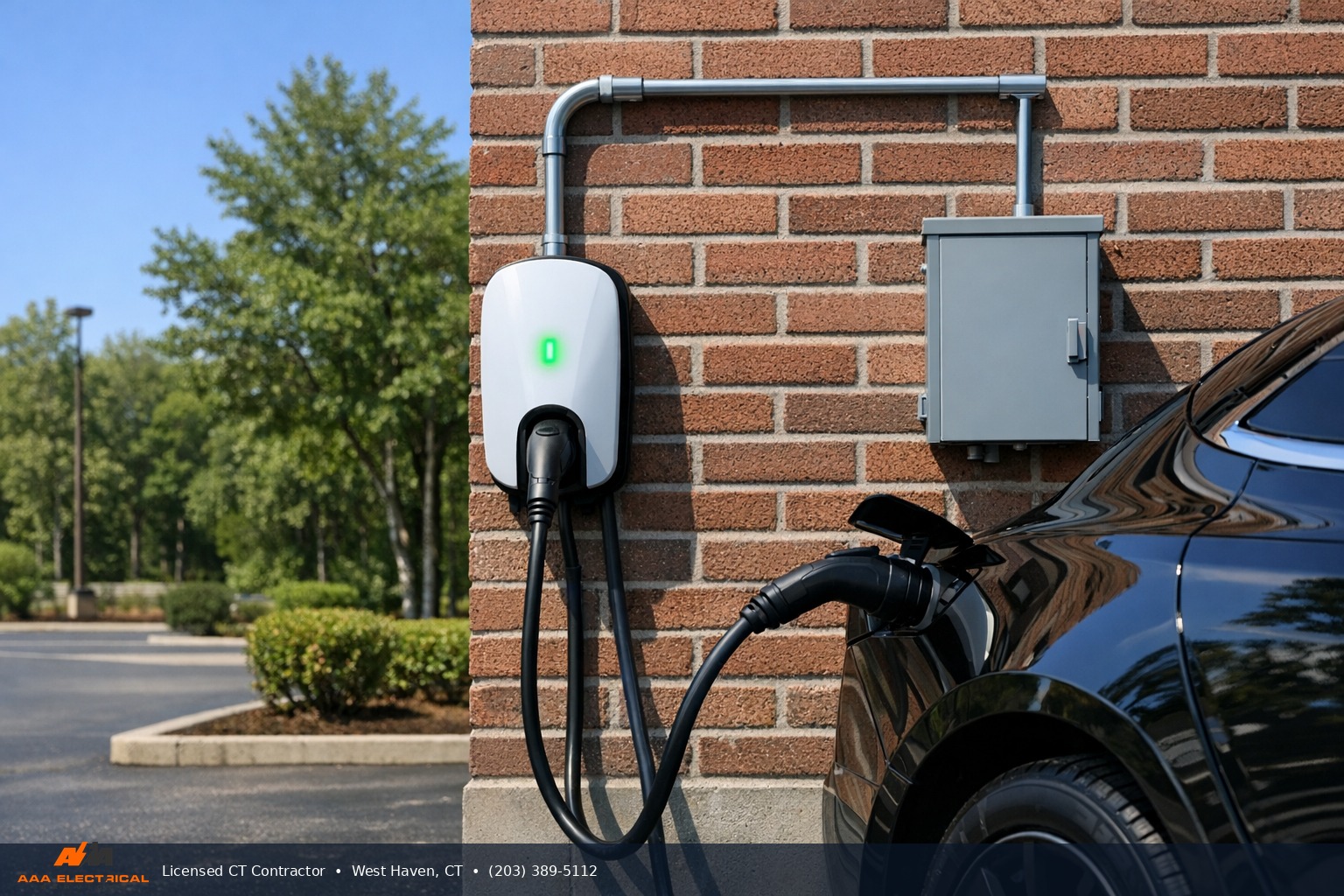
Here's something most business owners don't realize: if you install EV charging in Connecticut right now, federal and utility incentives can cover 60–80% of your costs. In some cases, they cover it all. But there's a deadline: June 30, 2026.
After that date, these incentives shrink or disappear. That's why now is the time to act. Let's break down how to get the maximum incentives and stack them to reach near-zero net cost.
The Federal 30C Tax Credit: Up to $100,000 Per Charger
The Section 30C Alternative Fuel Vehicle Refueling Property Credit is the biggest incentive available to businesses. It's substantial and—if you meet the requirements—it's yours to claim. Note: This credit expires June 30, 2026.
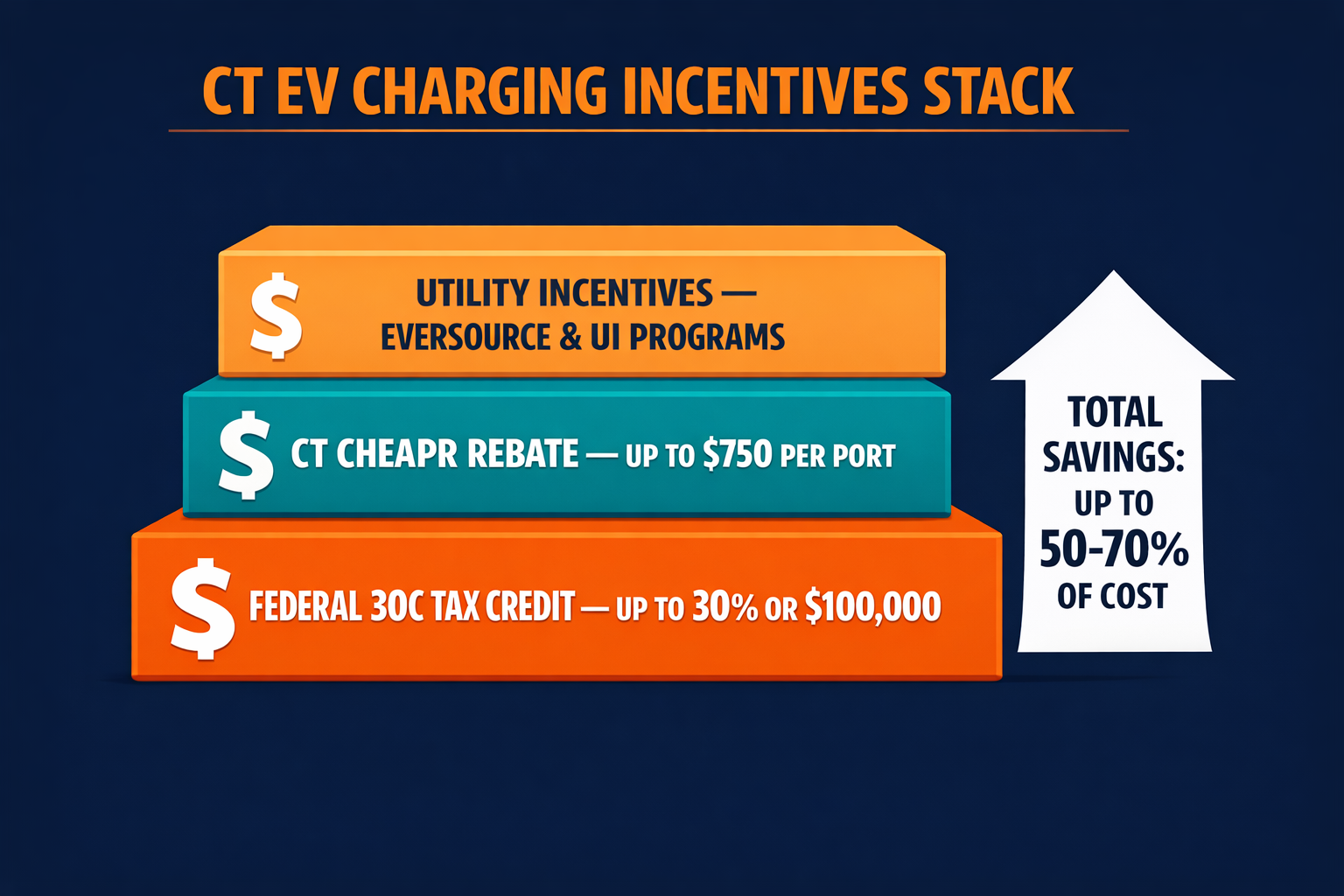
How it works: You install a qualified EV charger and claim a tax credit equal to 30% of the installation cost, up to $100,000 per charger port.
Example: Install a Level 2 charger for $3,000 all-in (equipment + labor). Your 30C credit is 30% × $3,000 = $900. Simple. (Must be placed in service before June 30, 2026.)
Example 2: Install a DC fast charger for $150,000. Your 30C credit is 30% × $150,000 = $45,000. That's real money.
Qualification requirements:
- Equipment must be new (not used)
- Charger must be installed at a "qualified location" (commercial, industrial, fleet, or multi-unit residential—not a private residence)
- You must be in the business of providing refueling property (or it must support your business operations)
- Installation must meet electrical code and safety standards
The deadline: June 30, 2026. If your charger is placed in service before that date, you can claim the credit. After that date, the credit drops or expires entirely (Congress hasn't yet renewed it).
This deadline matters. If you're thinking about installing chargers "eventually," now is the time to start the permitting process. It typically takes 8–12 weeks from quote to operational, which puts you squarely in the window for the federal credit.
Eversource and UI Rebates: 50% Off Equipment
Connecticut's two major utilities—Eversource and United Illuminating (UI)—both offer EV charger rebate programs, though the programs have changed significantly as of 2026.
Important update: As of January 1, 2026, Eversource's residential EV charger rebates are now income-restricted — you must have a household income at or below 300% of the Federal Poverty Level, or live in a designated High Poverty/Low Opportunity area. The commercial rebate programs have different eligibility. Contact Eversource directly at 203-350-3555 or check energize.ct.gov to confirm current commercial program availability before planning around these incentives.
Eversource commercial program: Has historically covered up to 50% of charger hardware costs, capped at $5,000 per unit. Program terms and funding levels change — verify current availability before committing.
United Illuminating: Offers commercial EV charging rebates typically in the $3,000–$5,000 range per charger depending on the project. Same advice applies — confirm current program details before planning.
The process when rebates are available: Install the charger with a licensed electrician (that's us), collect all documentation and invoices, and submit a rebate application to your utility. They typically respond within 30–60 days with approval and reimbursement.
We stay on top of what's currently available and handle the paperwork for you.
Want to Calculate Your Actual Incentives?
We'll run the numbers for your specific project. Call for a free incentive analysis and installation quote.
Call 203-389-5112Municipal Grants: The Bonus Layer
On top of federal and utility incentives, some Connecticut towns offer additional grants or rebates for EV charging. These vary by municipality, but they exist in places like:
- New Haven
- Fairfield
- Stamford
- Hamden
- Several others with climate action goals
Municipal grants are usually $2,000–$5,000 per charger and sometimes cover the same equipment costs as utility rebates. So the stacking strategy is: claim federal 30C on labor/installation (expires June 2026), claim utility rebate on equipment, and see if your town has a grant to cover additional costs.
We know which towns have programs and help you apply. No extra charge.
Real Example: How Incentive Stacking Works
Let's say you're a commercial office building in Fairfield with 40 parking spaces. You want to install 6 Level 2 chargers. Total installed cost: $30,000.
Project cost breakdown:
- 6 chargers (hardware): $10,000
- Electrical work (circuits, conduit, wiring): $15,000
- Site work & permits: $5,000
- Total: $30,000
Now apply incentives:
- Federal 30C on labor/installation (expires June 2026): 30% × $20,000 (labor portion) = $6,000
- Eversource hardware rebate: 50% × $10,000 (chargers) = $5,000 (capped at $5,000 per unit, so actually $5,000 for 6 units)
- Fairfield municipal grant: $3,000–$5,000 (varies by program)
- Total incentives: $14,000–$16,000
Your net cost: $30,000 - $15,000 = $15,000 or less. You've cut the cost in half or more.
In the best-case scenario with a full municipal grant: $30,000 - $16,000 = $14,000 out of pocket for a complete 6-charger installation. That's $2,300 per charger. For some businesses, that's nearly break-even.
Timeline: When to Start If You Want June 2026 Credits
The federal 30C credit expires June 30, 2026. To capture it, your charger needs to be "placed in service" (installed and operational) before that date.
Typical timeline from start to finish:
- Week 1–2: Assessment & Quote — We evaluate your site, identify costs, and provide estimates with incentive calculations.
- Week 2–4: Permitting — You approve the design and we pull municipal permits. Most Connecticut towns issue permits within 2–3 weeks.
- Week 4–6: Incentive Applications — While permitting happens, we start applications for federal 30C, Eversource rebates, and municipal grants. (These don't require pre-approval in most cases, but we prepare documentation.)
- Week 6–10: Installation — Electrical work, charger mounting, utility coordination, testing. Typically 2–4 weeks depending on complexity.
- Week 10–12: Inspection & Commissioning — Municipal inspector signs off, utility interconnection is complete, chargers are live.
- After commissioning: Rebate Processing — You submit utility rebate applications with final invoices. Eversource and UI usually respond within 30–60 days. Federal 30C is claimed on your tax return the following year.
Bottom line: If you start now (mid-March 2026), you'll be operational by mid-June. You'll be inside the federal credit window with time to spare.
If you wait until April or May to get quotes, you might not make the deadline. And missing the June 30 date means losing up to $100,000 per charger in federal credits.
Common Mistakes That Cost You Money
Mistake 1: Installing before getting permits. Unpermitted work doesn't qualify for rebates or 30C credits. Always get municipal permits first. Always.
Mistake 2: Hiring the cheapest electrician instead of a licensed one. Utility rebates and federal 30C credits require that installation meets code. Use a licensed contractor (like us) or risk the rebate being denied.
Mistake 3: Not documenting the installation. Keep all invoices, photos of the work, permits, inspection records, and electrical diagrams. You'll need these to apply for rebates.
Mistake 4: Forgetting to apply for utility rebates. The rebates are available—you just have to ask. We handle it, but make sure your electrician is actively helping you file the paperwork.
Mistake 5: Assuming municipal grants cover everything. Municipal programs are limited and often have cap-and-reserves restrictions. They're a bonus on top of federal and utility incentives, not a replacement for them. Stack all three.
Mistake 6: Missing the federal deadline. June 30, 2026 is a hard stop. After that, you lose the 30C credit unless Congress extends it (unlikely as of March 2026). The cost difference is tens of thousands of dollars per charger.
How to Maximize Your Rebates in 5 Steps
1. Get a quote from a licensed electrician. Call us or another licensed contractor. Get a detailed breakdown of equipment, labor, and other costs. We'll also identify which rebates you qualify for.
2. Verify your utility. Are you on Eversource or UI? Confirm which rebate program applies. (Some commercial customers might be on different rates with different incentives.)
3. Check for municipal grants. Contact your town's sustainability or public works department and ask if they have EV charger rebate programs. Mention that you're a business installing charging for employees or customers.
4. Permit the work immediately. Don't wait on rebate approvals. Pull permits and start the permitting process now. This ensures your installation is complete before the June deadline.
5. Install with a licensed contractor and document everything. Keep invoices, photos, permits, and inspection records. Rebate agencies want proof that the work was done right.
We handle steps 1, 2, 3, 4, and 5. You just say yes and let us manage the details.
Why June 2026 Is Urgent (Not Just Hype)
You might think: if the credit expires, I can just install next year. That's a $100,000 per charger mistake.
The federal 30C credit is not guaranteed to exist after June 30, 2026. Congress set a sunset date. When it expires, the incentive goes away unless Congress votes to extend it. As of March 2026, there's no indication that an extension is coming.
Without the federal credit, a $30,000 installation project costs you the full $30,000 instead of $15,000–$20,000. For larger projects, you're looking at losing hundreds of thousands in credits.
That's not fear-mongering. That's math. If you want EV charging, the economics are radically different if you install before June vs. after June.
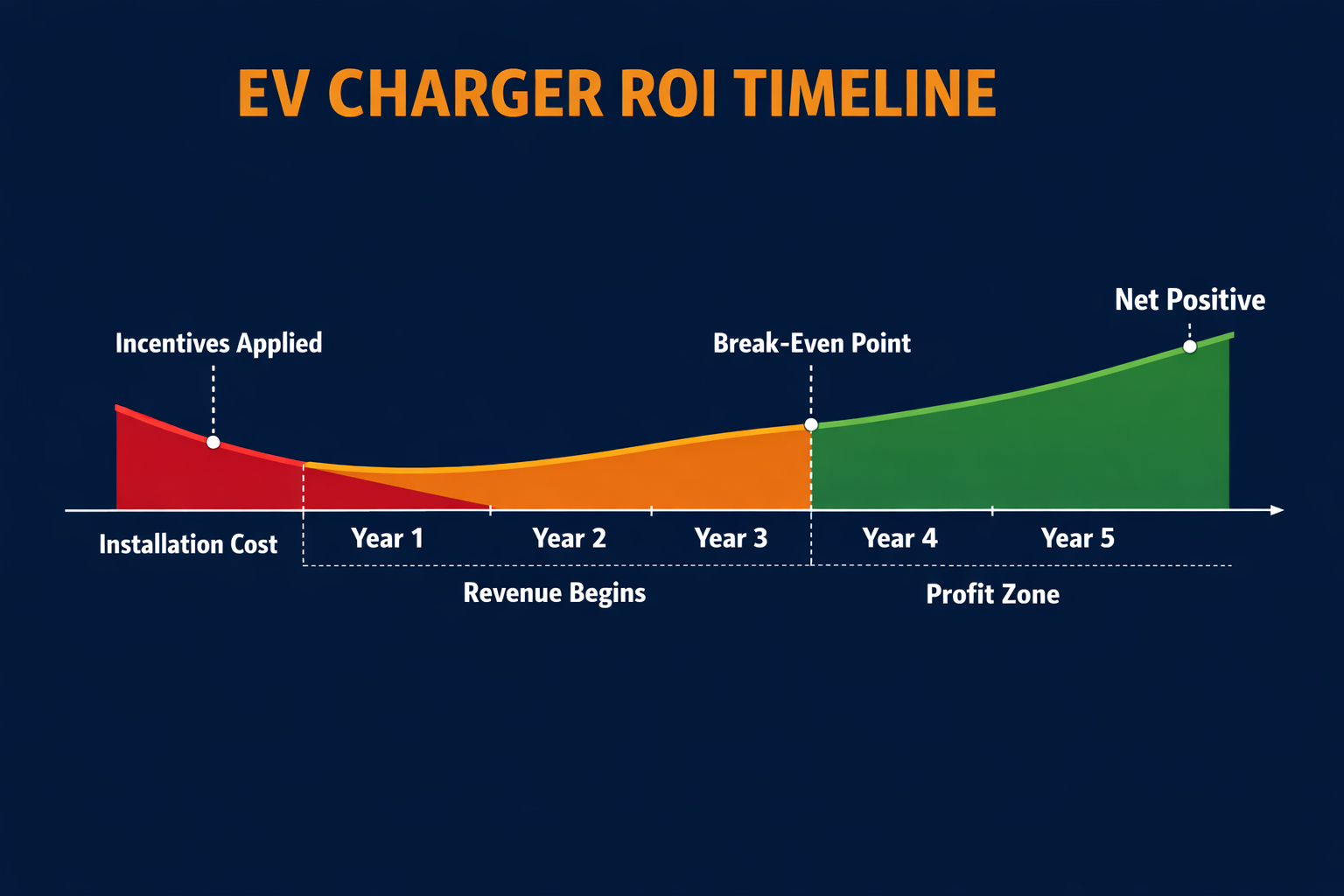
Businesses that act now will be looking at EV charging as a high-ROI investment. Businesses that wait will be looking at it as a significant capex burden. The difference is the 30C credit.
Don't Lose the Federal Credits
We'll handle the quotes, permitting, installations, and rebate applications to capture every available incentive. Time is running out.
Call 203-389-5112Related Articles
Find Your Town
We install EV chargers across southern Connecticut and handle all incentive paperwork. Find your town: