In 2023, NFPA 70B changed something important: what used to be a "recommendation" for infrared thermographic testing became mandatory for most commercial facilities. If you own or manage a building in Connecticut and haven't had an infrared inspection, you need to understand what's changed and why.
Here's what you need to know—and what happens if you skip it.
What Is Infrared Thermographic Testing?
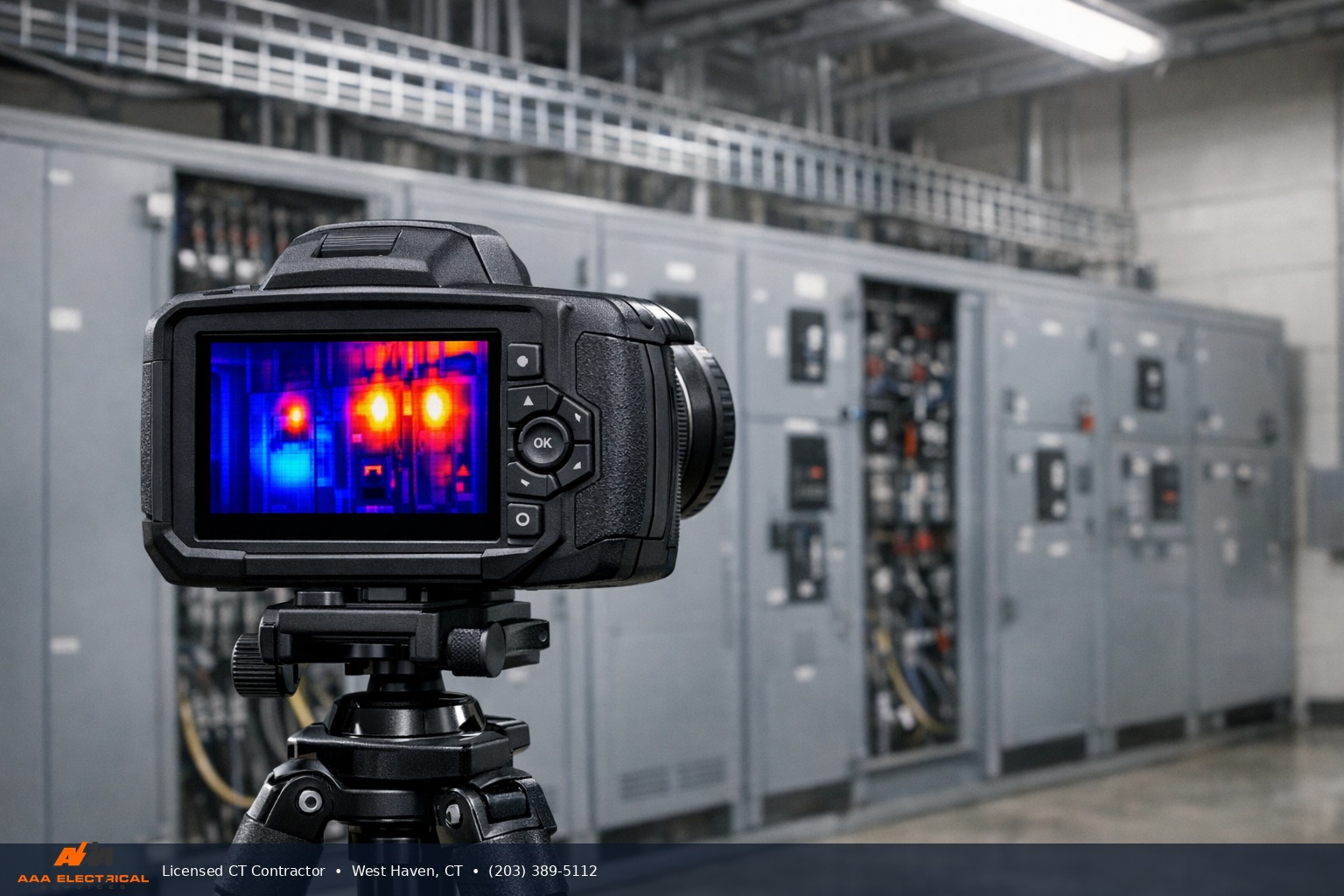
Infrared thermography is a non-invasive way to spot electrical problems before they become dangerous. A thermal camera sees heat signatures invisible to the human eye. When electrical connections loosen, corrosion develops, or components degrade, they produce excess heat. The infrared camera catches that heat and flags it.
Think of it like a medical thermal scan, but for your electrical system. A doctor uses thermal imaging to spot inflammation or abnormal blood flow. We use it to spot loose connections, overloaded circuits, and failing components.
The camera produces thermal images where hot spots appear in red or orange, normal areas are yellow or green, and cool areas are blue. Areas that are significantly hotter than surrounding equipment are red flags—literally.
What Changed in 2023 With NFPA 70B?
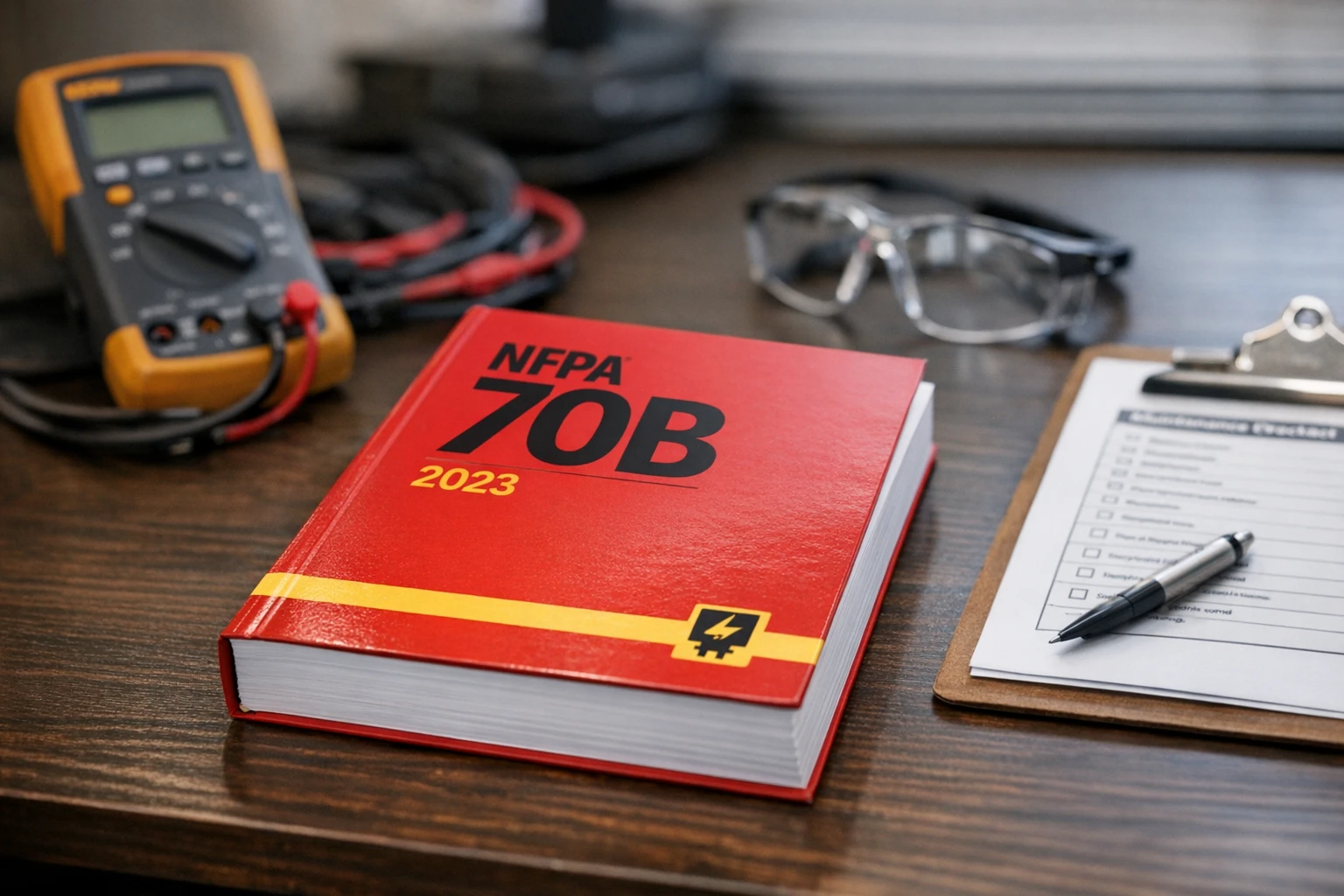
The 2023 edition of NFPA 70B (Recommended Practice for Electrical Equipment Maintenance) shifted language from "should consider" thermography to "shall perform." For many facilities, that means thermography moved from optional to mandatory.
Specifically:
- Commercial buildings over 50,000 sq ft: Infrared testing is now recommended annually (previously optional).
- Buildings with critical operations: Hospitals, data centers, manufacturing facilities—annual testing is now expected.
- Buildings with aging infrastructure: Facilities built before 1995 should prioritize thermography to catch hidden degradation.
- Equipment rated above 200 amps: Main service panels, sub-panels, and distribution equipment now require scheduled thermography.
The standard doesn't legally mandate thermography—there's no Connecticut law forcing you to do it. But if something fails and causes a fire or injury, the lack of documented maintenance (including thermography) puts you in a weak legal position. Insurance companies know this. They're increasingly requesting thermography reports as part of risk assessments and in some cases making coverage contingent on it.
What Does Infrared Testing Actually Detect?
Infrared thermography catches things visual inspections miss. Here's what we're looking for:
- Loose connections: A connection that's intermittently loose or corroded generates heat as resistance increases. Infrared spots it immediately.
- Overloaded circuits: If a circuit is consistently over-amperage, components run hot. We can identify circuits pushing too hard.
- Failed breaker mechanisms: A breaker that's degraded or sticking sometimes heats up during operation. Thermal imaging reveals it.
- Corrosion and oxidation: When copper connections corrode, resistance increases and heat builds up. Thermal images show the pattern before visible corrosion appears.
- Transformer and capacitor problems: Aging transformers and capacitors produce heat signatures that change as they degrade. Early detection prevents catastrophic failure.
- Phase imbalances: When current flows unevenly across phases in a 3-phase system, components heat differently. Thermography shows the imbalance.
- Motor and equipment degradation: Motors, compressors, and other rotating equipment leave distinct heat signatures. Unusual patterns indicate wear.
None of these problems are visible to the eye. You can't walk into a panel and tell if a connection is loose or if corrosion is building up inside the terminal. A thermal camera does it instantly.
Why NFPA 70B Pushed Thermography From Optional to Expected
The National Fire Protection Association revised 70B because the data was clear: many electrical fires and equipment failures could've been prevented with scheduled infrared testing. Loose connections and corroded terminals don't just fail silently—they heat up and can cause fires.
According to NFPA, electrical failures account for a significant percentage of industrial fires and facility downtime. Most of those failures could've been caught 6–12 months earlier with thermography. The practice is cost-effective, non-invasive, and delivers clear actionable data.
So NFPA moved from recommending it to essentially saying: "If you're not doing this and something fails, you weren't following current best practices." That matters to regulators, insurance companies, and lawyers.
Not Sure If Your Building Needs It?
We'll assess your facility's size, age, and equipment to tell you whether thermography is recommended. Call for a free facility evaluation.
Call 203-389-5112The Hidden Cost of Skipping Infrared Testing
You might think: infrared testing costs a few thousand dollars. Skipping it saves money. That math doesn't hold up.
Cost of a preventive infrared inspection: $1,500–$5,000 depending on facility size.
Cost of an unplanned electrical failure:
- Emergency service call: $2,000–$5,000
- Emergency panel repair/replacement: $8,000–$50,000+
- Facility downtime (lost operations, lost revenue): $5,000–$500,000+ depending on your business
- Potential fire damage: immeasurable
- Liability if someone's injured: immeasurable
A single unplanned failure often costs 10–100x more than preventive thermography would have. And unlike preventive maintenance, emergency failures often happen at the worst time—nights, weekends, during critical operations.
From an insurance perspective: if you had a fire and couldn't show that you'd had thermography done, your insurer has grounds to question your maintenance practices. That conversation costs time and money and could impact future coverage.
What AAA's Infrared Inspection Process Includes
When we perform an infrared thermographic inspection, we're not just taking pictures. Here's what you get:
1. Full Facility Assessment — We identify all electrical equipment: service entrance, main panels, sub-panels, transformers, capacitors, motor control centers, distribution boxes, everything rated above 200 amps and any equipment that's critical to your operations.
2. Environmental Data Collection — We document ambient temperature, humidity, and load conditions. These affect thermal readings. We note whether equipment is under load or idle when we test (loaded equipment produces more heat, giving a clearer picture).
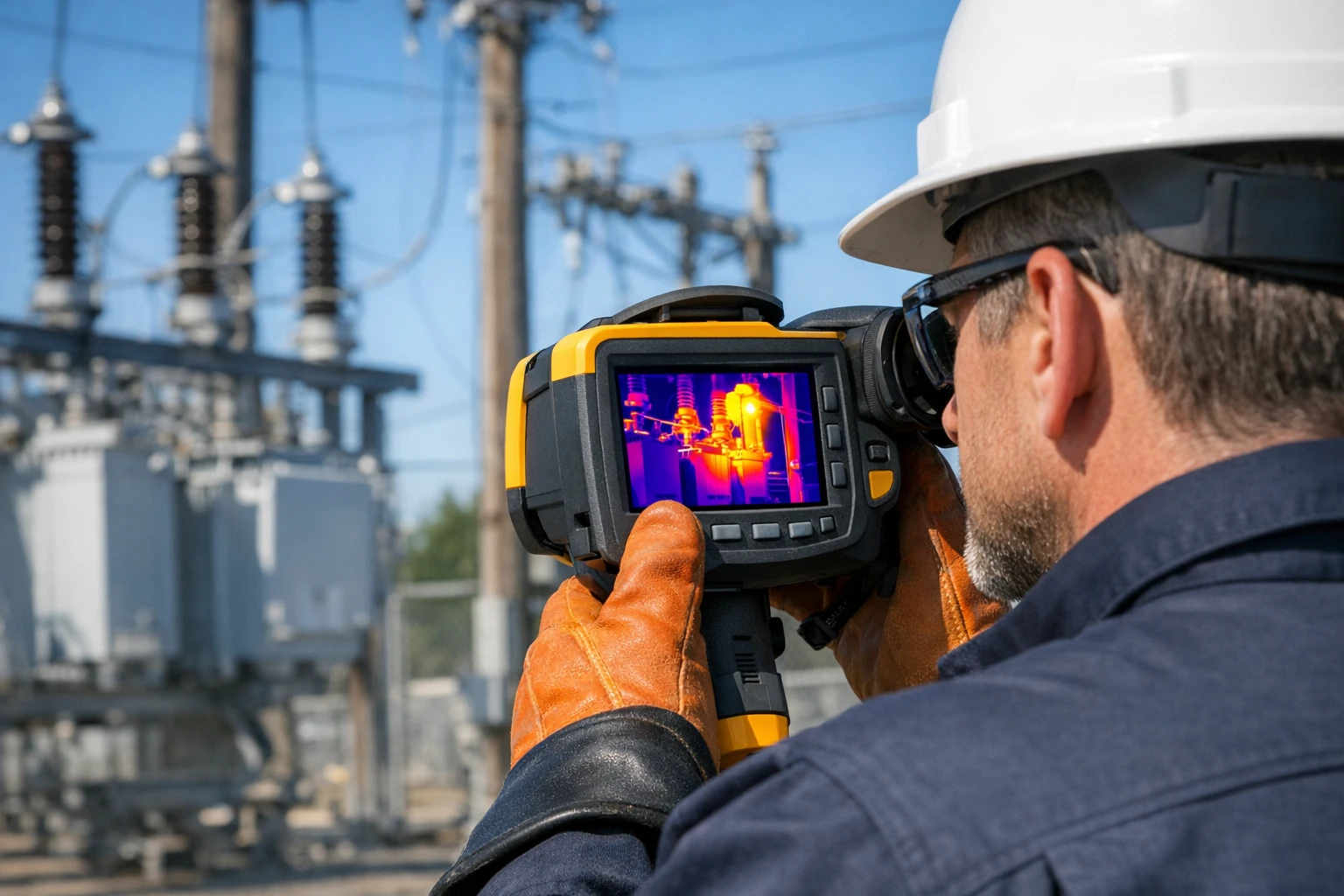
3. Thermal Imaging — We scan every component with a calibrated infrared camera. We capture images of any area showing temperature differentials above normal baseline. We document specific components, their thermal signatures, and the difference between them and surrounding equipment.
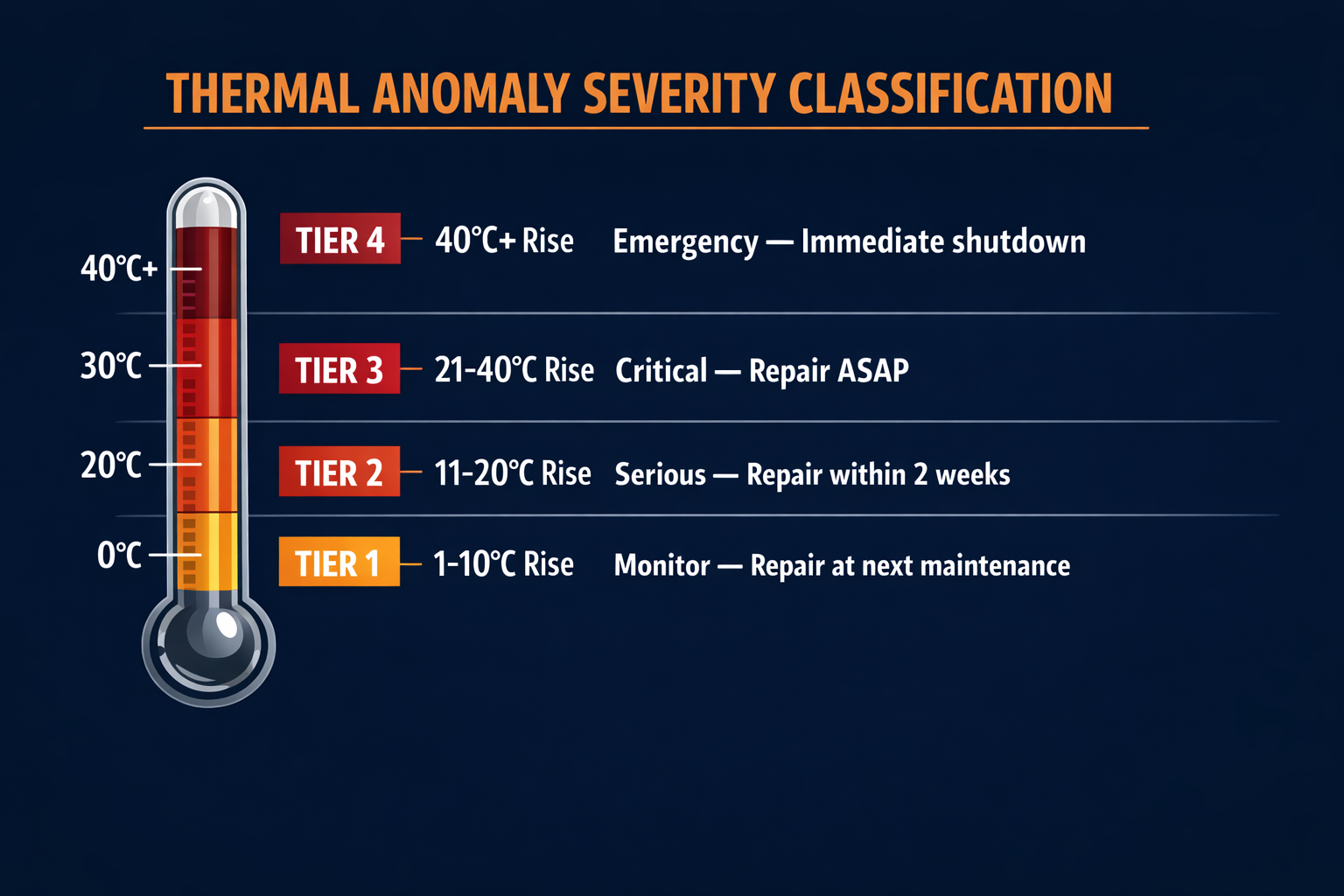
4. Temperature Classification — We classify each finding:
- Green (Normal): Temperature within normal range, no action required. Schedule re-inspection in 12 months.
- Yellow (Monitor): Temperature elevated but not critical. Equipment is functional. Recommend re-inspection in 3–6 months to track whether temperature is increasing or stabilizing.
- Orange (Action Required): Significant temperature elevation. Schedule service within 2–4 weeks. Problem likely to worsen if not addressed.
- Red (Immediate): Critical temperature elevation. Equipment at risk of failure. Schedule service immediately (within 24–72 hours). May recommend equipment shutdown to prevent catastrophic failure.
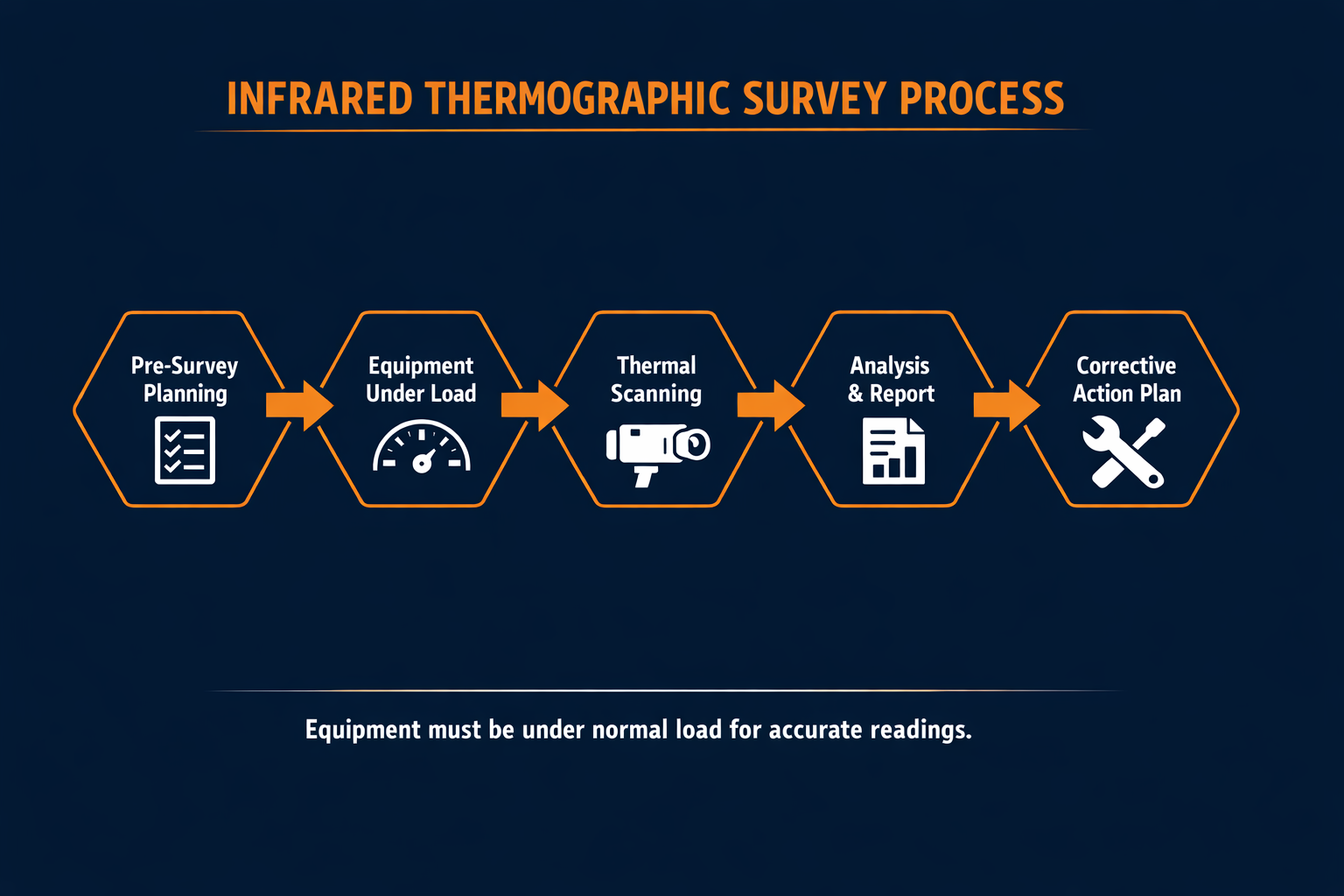
5. Comprehensive Written Report — You get a detailed report with:
- Thermal images of all equipment tested
- Temperature readings and baseline comparisons
- Classification for each finding (Green/Yellow/Orange/Red)
- Specific recommendations and priority timeline for each issue
- Estimated cost and complexity of recommended repairs
- Documentation of compliance with NFPA 70B standards
6. Follow-Up and Scheduling — We recommend re-inspection schedules based on your facility's risk profile. We document recommendations for your insurance company and provide summaries for your maintenance team.
Infrared vs. Visual Inspection vs. Manual Testing: How They Compare
You might ask: why can't we just look at the panel and tell if something's wrong? Good question. Here's how these three approaches compare:
| Method | Detects | Cost | Time | Safety |
|---|---|---|---|---|
| Visual Inspection | Obvious damage, loose wires, corrosion you can see | $300–$800 | 1–2 hours | Requires opening panels; electrician at risk |
| Manual Testing (Volt/Ohm meter, load testing) | Voltage drops, resistance, load capacity issues | $800–$2,000 | 2–4 hours | Requires contact with equipment; shock/arc risk |
| Infrared Thermography | Hidden heat signatures, degradation patterns, failing components before visual symptoms | $1,500–$5,000 | 2–6 hours | Non-contact, no arc/shock risk, no downtime |
The reality: you need all three. Visual inspection catches obvious problems. Manual testing verifies electrical parameters. Infrared catches things the other two miss—degradation that hasn't yet caused visible damage or measurable voltage drop, but will in 3–6 months.
Infrared is the preventive layer that catches problems early enough to schedule maintenance rather than emergency repairs.
When Your Building Should Get Infrared Testing (Priority Levels)
Priority 1 (Do This Now): Facilities built before 1995, equipment over 20 years old, any facility with previous electrical issues or outages, facilities where downtime is costly (hospitals, data centers, manufacturing, retail).
Priority 2 (Within 6 Months): Commercial buildings over 50,000 sq ft, facilities with 3+ phase service, buildings with 200+ amp service entrance, facilities with critical HVAC, fire alarm, or security systems.
Priority 3 (Within 12 Months): Standard commercial buildings, office buildings, most retail facilities, newer buildings (post-2000) with regular maintenance history.
Even if your building isn't Priority 1, start planning for an infrared inspection. Compliance with NFPA 70B best practices is becoming standard, not optional.
Documentation and Insurance: Why This Matters
Here's something most business owners don't realize: if you have an electrical fire and no documented maintenance history (including thermography), your insurance company will question your diligence. Even if the fire wasn't "your fault," failure to follow industry best practices—as outlined in NFPA 70B—is a gray area.
A thermography report is documentation that you're following current electrical maintenance standards. It's worth money in the form of:
- Insurance claims support: If something fails, you have evidence you were being proactive.
- Coverage reliability: Some insurers require thermography for coverage renewal or offer discounts for facilities with documented thermography history.
- Legal protection: If someone's injured and there's a lawsuit, showing you followed NFPA best practices is a strong defense.
It's not just maintenance—it's risk management.
Ready to Schedule Your Infrared Inspection?
AAA has been performing NFPA 70B-compliant thermography across Connecticut for 17+ years. We'll document your compliance and give you actionable maintenance recommendations.
Call 203-389-5112Related Services
Find Your Town
We provide NFPA 70B infrared testing services across southern Connecticut. Find your town for local service information: