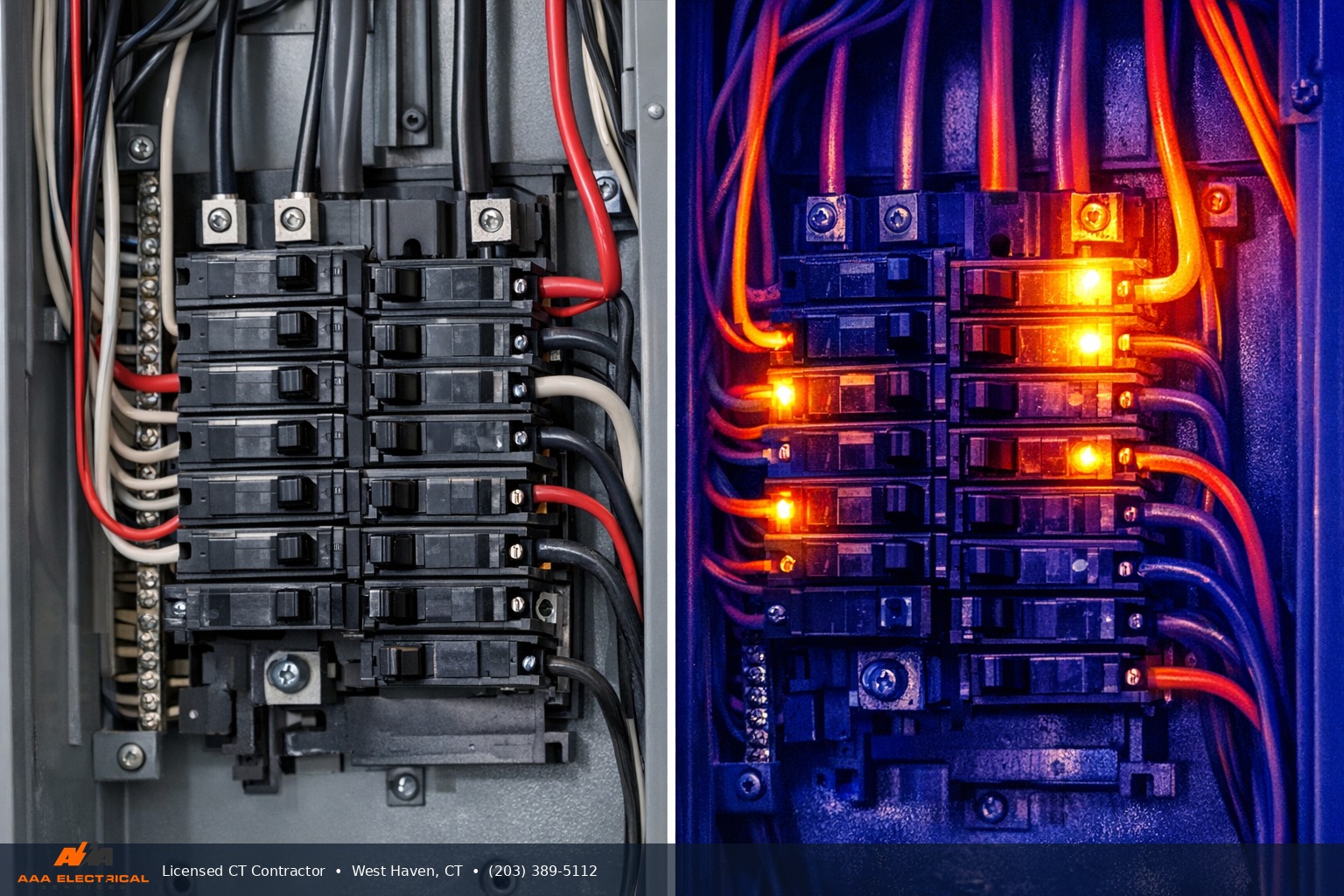
When building owners hear "electrical inspection," most picture an electrician opening a panel, looking inside, and checking for obvious problems. That's a visual inspection — and it has its place. But it only catches what you can see with your eyes.
Infrared thermographic inspection is a fundamentally different tool. It sees heat. And heat is the early warning signal for almost every electrical failure mode that leads to fires, equipment damage, and unplanned downtime.
Here's how the two compare, when you need each, and why one doesn't replace the other.
What a Visual Inspection Catches
A visual inspection is exactly what it sounds like. A qualified electrician opens panels, examines connections, checks for physical damage, looks for signs of overheating (discoloration, melted insulation), and verifies that everything is properly labeled and accessible.
Visual inspections are good at catching:
- Physical damage — cracked housings, broken handles, missing covers
- Code violations — improper wiring methods, missing labels, blocked access
- Obvious wear — corroded enclosures, water intrusion, pest damage
- Late-stage overheating — discolored conductors, melted plastic, burn marks
- Improper installations — double-tapped breakers, wrong wire sizes, missing grounds
The limitation is right there in the name: you can only catch what's visible. By the time you can see burn marks or melted insulation, the problem has been developing for weeks or months. You're seeing the damage, not the early warning.
What Infrared Testing Catches
An infrared inspection uses a calibrated thermal camera to see temperature differences across your entire electrical system — while it's running under normal load. No shutdown required.
Infrared testing catches problems that are invisible to the naked eye:
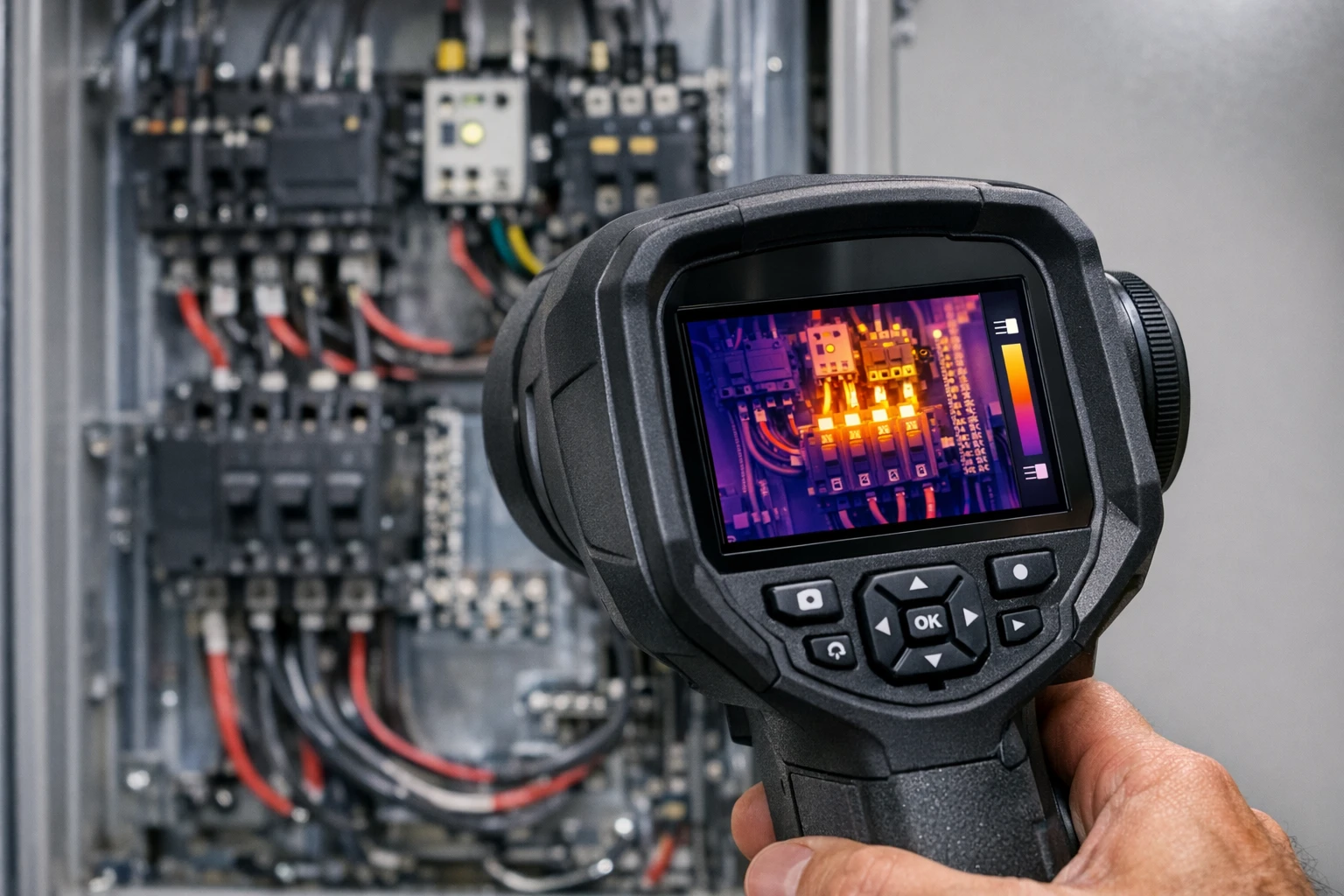
Professional-grade FLIR camera used during infrared electrical inspections
- Loose connections — a connection running 30°F hotter than its neighbor is a clear sign of increased resistance, even though it looks perfectly fine visually
- Overloaded circuits — conductors carrying more current than their rating show up as hot lines on the thermal camera
- Failing breakers — internal contact degradation creates heat patterns visible only to infrared
- Unbalanced loads — phase imbalances show up as temperature differences between conductors
- Harmonic heating — excess heat in neutral conductors caused by non-linear loads
- Insulation breakdown — deteriorating insulation changes the heat signature before any visible damage appears
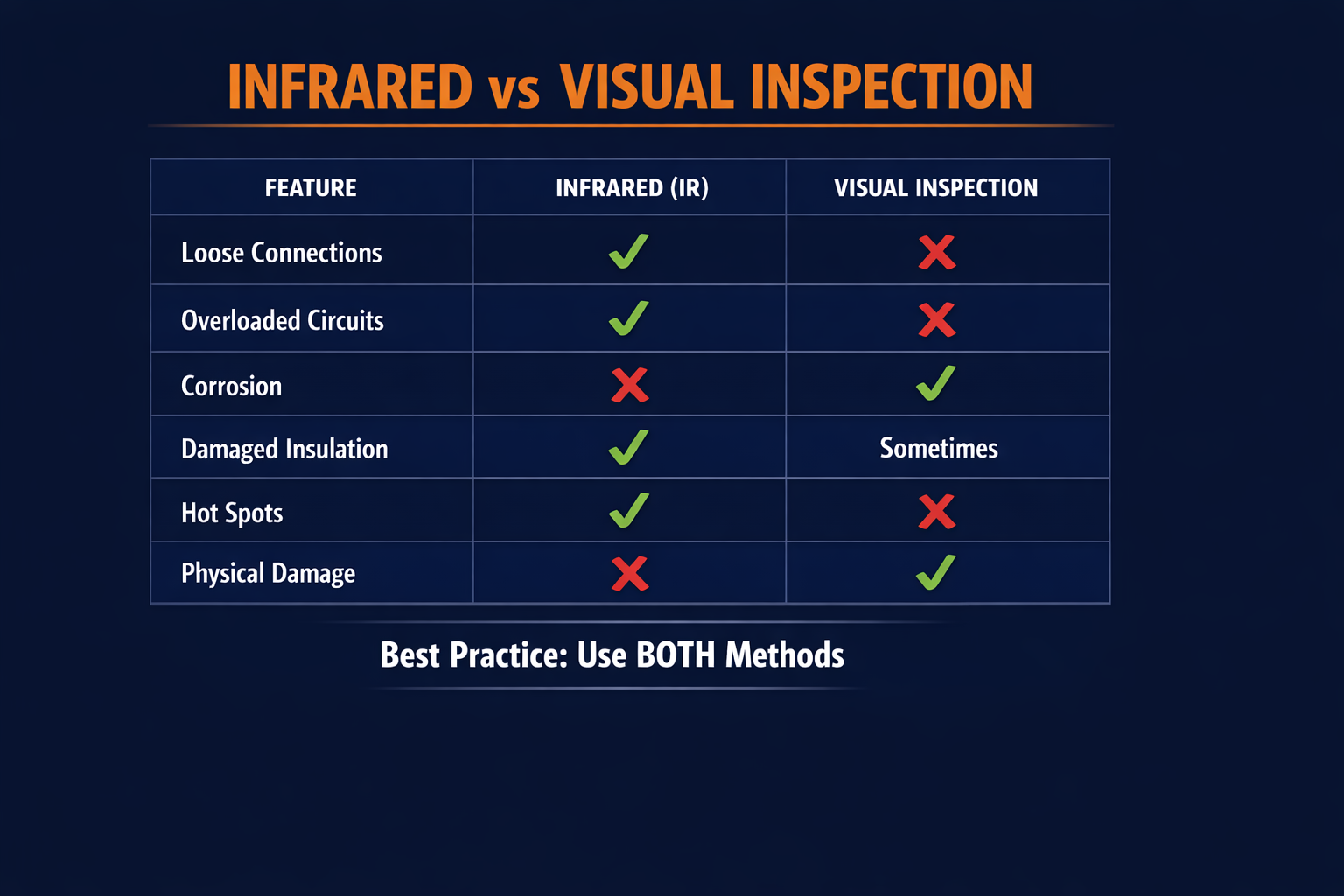
Side-by-Side Comparison
| Capability | Visual Inspection | Infrared Testing |
|---|---|---|
| Detects loose connections before failure | No | Yes |
| Identifies overloaded circuits | No | Yes |
| Catches failing components early | No | Yes |
| Finds code violations | Yes | No |
| Detects physical damage | Yes | No |
| Requires system shutdown | Usually | No |
| Meets NFPA 70B requirements | Not alone | Yes |
| Insurance-accepted report | Varies | Yes |
| Prevents fires proactively | Limited | Yes |
| Non-disruptive to operations | Varies | Yes |
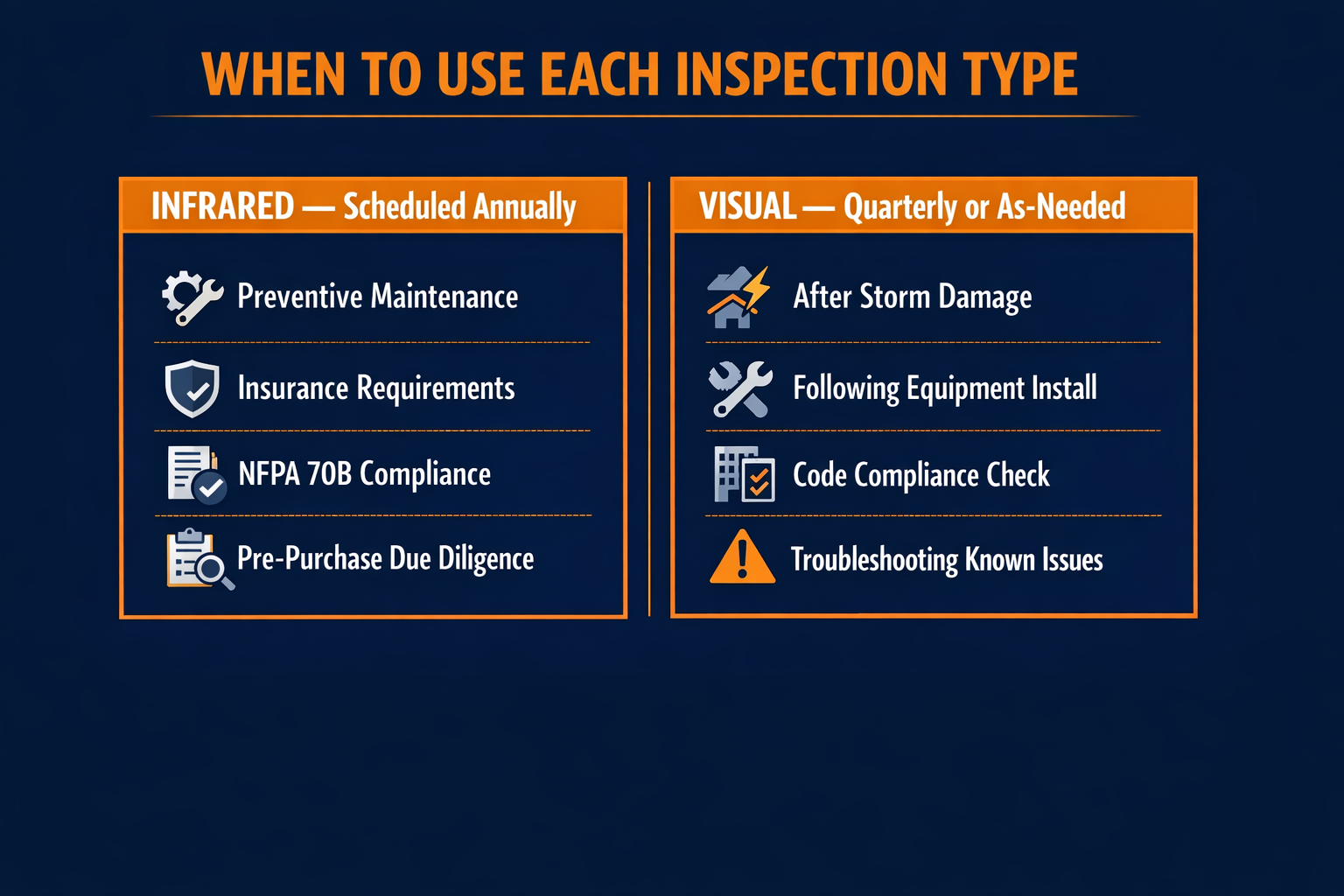
When You Need Each
Use Visual Inspection When:
- You suspect a code violation or improper installation
- There's visible damage from water, pests, or physical impact
- You're evaluating a building before purchase
- A renovation or addition is being planned
- You need to verify proper labeling and accessibility
Use Infrared Testing When:
- Annual NFPA 70B compliance is required
- Your insurance carrier requests or requires it
- You want to prevent electrical fires proactively
- The building has aging electrical infrastructure (15+ years)
- You've added significant electrical load (new equipment, HVAC, EV chargers)
- You want zero-downtime inspection — no shutdown needed
Use Both When:
For the most comprehensive assessment, pair an infrared scan with a visual inspection. The infrared catches what's happening electrically (heat = trouble). The visual catches what's happening physically (damage, code issues, accessibility). Together, they give you a complete picture of your electrical system's health.
The Bottom Line for Building Owners
A visual inspection tells you what's already gone wrong. An infrared inspection tells you what's about to go wrong. For fire prevention, insurance compliance, and NFPA 70B requirements, infrared testing is the standard — and it's the one inspection you can do without shutting anything down.
Schedule Your Infrared Inspection
Zero downtime. NFPA 70B compliant. Insurance-ready reports.
Serving New Haven and Fairfield counties.