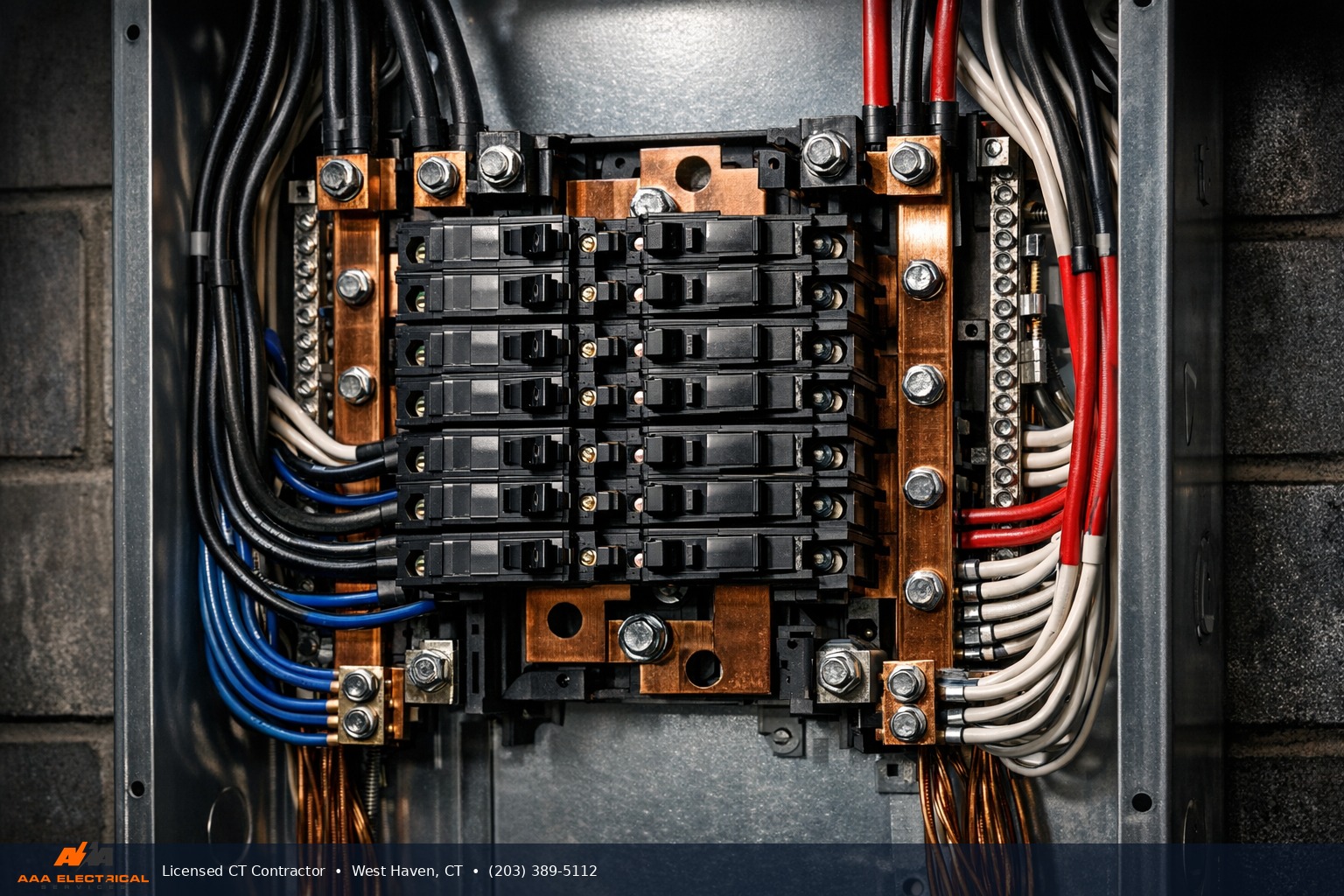
Your electrical panel is the heart of your building. When it starts failing, you'll notice small problems first. But if you ignore them, you're asking for an emergency call at 11 PM on a Friday—or worse, a fire.
Here are the five signs your commercial building needs a panel upgrade, what's actually happening inside that panel, and why waiting costs more than acting now.
Sign #1: Breakers Trip Constantly
If your breakers are tripping multiple times a week—especially in the same circuits—your panel is telling you something. One breaker tripping occasionally is normal (something's overloaded). Multiple breakers tripping frequently means your panel is running out of capacity.
What's happening: Each breaker is rated for a specific amperage. When you pull too much current through that circuit, the breaker trips to protect the wiring. If breakers are tripping on normal loads (HVAC systems, lighting, regular equipment), it means either:
- Your electrical load has grown beyond what your panel can handle
- There's a short circuit or ground fault somewhere in the system
- The breaker itself is failing and needs replacement
A single tripped breaker: call an electrician to investigate. Frequent trips across multiple circuits: you're looking at a panel capacity issue, and you need an upgrade to solve it permanently.
Sign #2: Lights Flicker or Dim Unexpectedly
Flickering lights aren't just annoying—they're a sign of unstable voltage. If lights dim when the air conditioning kicks on, or flicker when you turn on a high-powered tool or appliance, your panel might not be supplying steady voltage.
What's happening: When you add a major load to the circuit (like a compressor or motor starting), it draws a surge of current. If your panel doesn't have capacity to supply that surge without voltage dropping, everything on the circuit experiences a voltage sag. That causes lights to dim.
Occasional dimming: sometimes normal. Consistent dimming tied to specific equipment: your panel doesn't have headroom. You need an upgrade.
Why this matters: voltage instability stresses all your electrical equipment. Motors don't like it. Sensitive electronics don't like it. Over time, flickering voltage causes early failure of HVAC systems, lighting ballasts, and computers. The damage accumulates silently until something burns out.
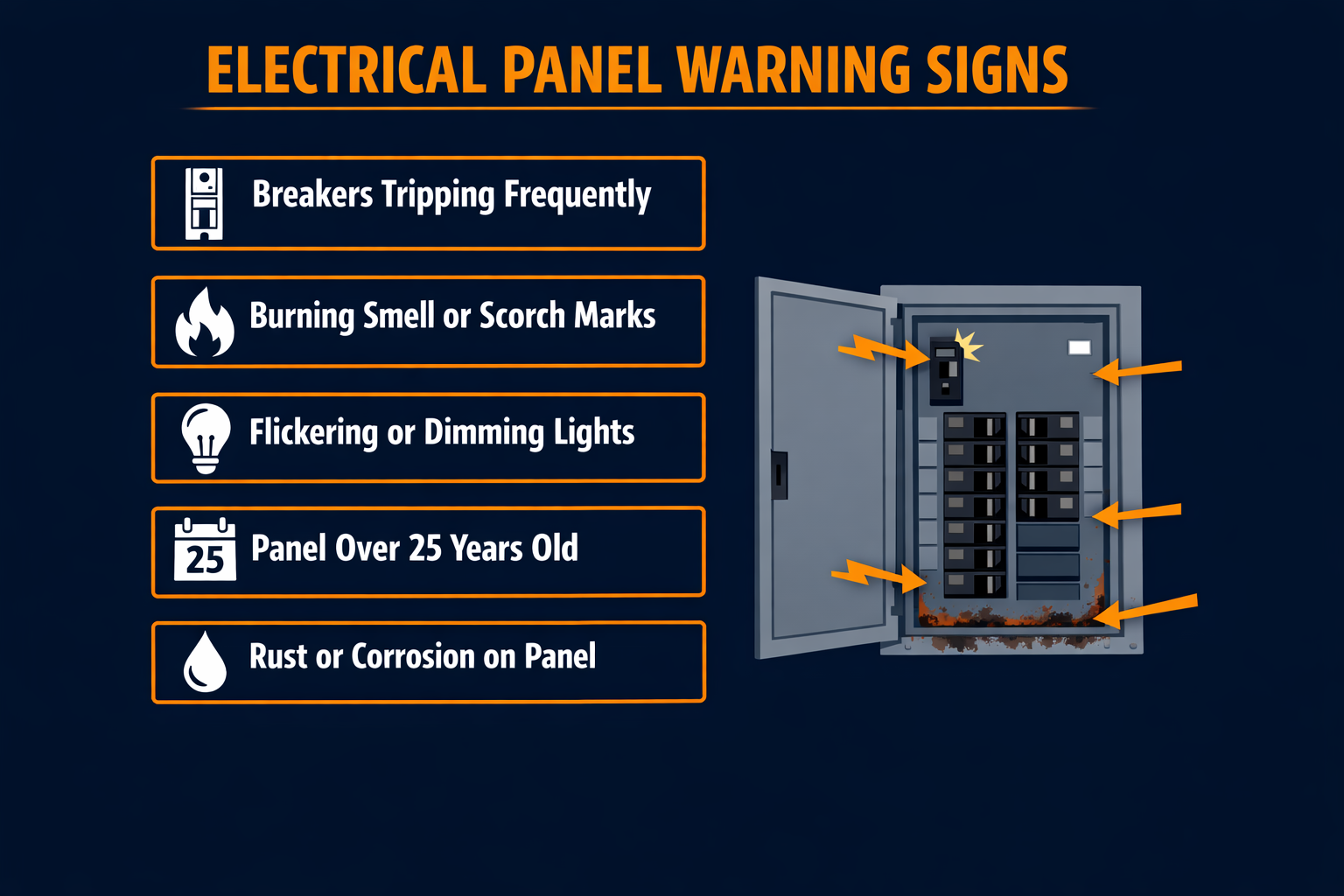
Sign #3: Your Panel Is Over 30 Years Old
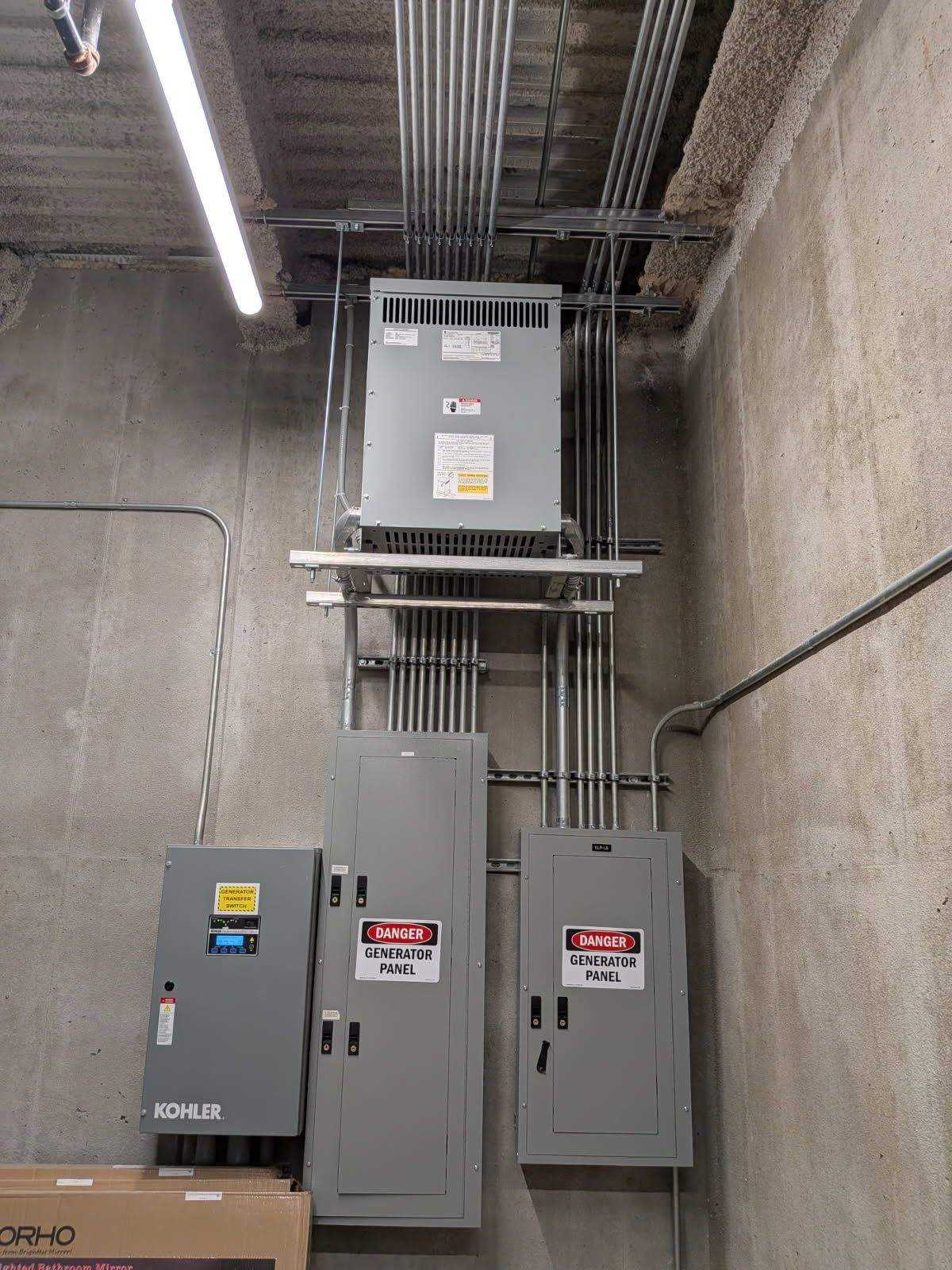
If your panel was installed before 1995, you're operating with outdated technology. Older panels have lower amp ratings (200 amps was standard; modern buildings need 400-600 amps). Components degrade. Materials corrode. Safety standards have changed.
Some older panel brands—Federal Pioneer, Zinsco—had manufacturing defects and are now known to have failure rates. If your building has one of these, a panel upgrade isn't optional; it's a liability issue.
What happens: Older panels lose capacity simply through age. Breakers wear out. Contact surfaces corrode. Internal components degrade. A 40-year-old panel isn't just outdated; it's a risk.
Pro tip: Check your panel. If it says "Federal Pioneer" or "Zinsco" on the front, call us immediately. These panels have higher-than-normal failure rates and some have been subject to recalls.
Sign #4: You're Running Too Many Extension Cords and Power Strips
If your facility has permanent extension cords snaking across the floor and power strips daisy-chained together, you don't have enough outlets or circuits. That's the symptom of a panel that can't keep up with your actual electrical needs.
This is dangerous for multiple reasons:
- Fire risk: Overloaded extension cords and power strips overheat. They're the cause of many commercial fires.
- Voltage drop: Long extension cords lose voltage as electricity travels. Equipment at the end of a 50-foot extension cord is running at lower voltage, which stresses it.
- Trip hazard: Permanent extension cords across walkways are an OSHA violation. You're exposing yourself to fines.
- It's a bandaid: Using extension cords means you're not addressing the root problem—your panel doesn't have enough circuits.
The solution: a panel upgrade with additional circuits run to where you actually need power. That costs money upfront, but it's way cheaper than a fire or an injury.
See Any of These Signs?
We'll do a free panel assessment to tell you whether an upgrade is needed and what it'll cost.
Call 203-389-5112Sign #5: You Smell Burning or Notice Warm Spots on the Panel
This is the urgent one. If you smell burning plastic or ozone near your panel, or if the panel enclosure is warm to the touch, you've got a serious problem—possibly an internal short or arcing connection.
What's happening: When connections inside the panel corrode or loosen, resistance increases. High resistance causes heat. If the connection is corroded or partially melted, it can arc (electricity jumping the gap), which produces that burning smell.
Do not ignore this. A burning panel can cause a fire. If you smell burning near your electrical equipment:
- Do not touch the panel
- Shut off non-essential loads if safe to do so
- Call an electrician immediately (same day, not tomorrow)
- If there's visible smoke or flame, call 911 first
A burning smell is not something to investigate yourself. This is when you call us and say "we have an emergency."
What It Costs to Ignore These Signs
A panel upgrade costs $4,000–$12,000 depending on your building's size and complexity. That sounds expensive.
Now consider what happens if you don't upgrade:
- Emergency service call: $1,500–$3,000 for after-hours or weekend work
- Equipment failure: HVAC systems, refrigeration, motors failing prematurely due to voltage instability: $5,000–$20,000
- Facility downtime: If you're retail, food service, or office space, downtime costs real money. $500–$5,000+ per hour of lost operations
- Fire damage: If an old panel causes a fire, you're looking at rebuilding costs, lost inventory, liability claims—potentially hundreds of thousands of dollars
- Insurance implications: If a fire happens and you had a known panel issue without documented upgrades, your insurer might deny coverage
A proactive panel upgrade costs less than a single emergency failure. And it eliminates the risk entirely.
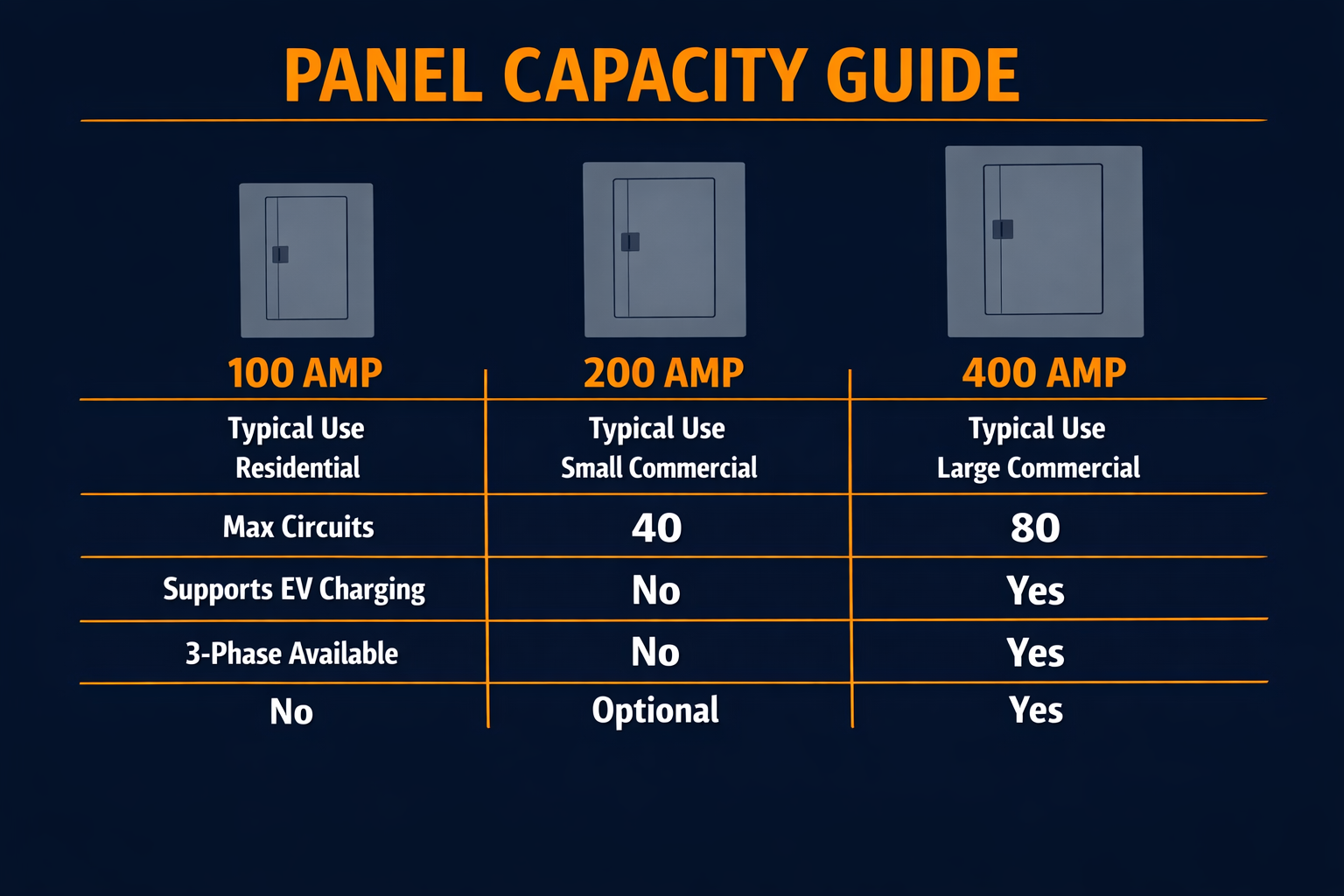
How We Approach Panel Upgrades
A panel upgrade isn't just swapping out the old box for a new one. Here's our process:
1. Assessment: We evaluate your current panel capacity, age, condition, and electrical load. We identify which circuits are overloaded and where you need additional circuits.
2. Load Calculation: We calculate your actual electrical demand and design a new panel sized appropriately for your current needs plus 25% headroom for growth.
3. Utility Coordination: For larger upgrades (especially if service entrance upgrade is needed), we coordinate with your utility company to ensure they can deliver the required amperage.
4. Permitting: We pull municipal permits and schedule inspections. This is non-negotiable—unpermitted electrical work is code violation territory.
5. Installation: We disconnect the old panel safely, install the new one, and reconnect all circuits. We test everything and get municipal sign-off.
6. Documentation: You get a full report showing your new panel capacity, circuit distribution, and compliance with current electrical code.
The whole process typically takes 2–4 weeks from assessment to completion, depending on utility availability and permit timelines.
Why You Should Act Now (Not Later)
If you see any of these five signs, schedule an assessment today. Here's why procrastinating costs money:
Scheduled upgrades are cheaper than emergency repairs. When you plan it, we can schedule work during off-hours, coordinate with your utility company efficiently, and get competitive pricing. When it's an emergency, you're paying premium rates.
Your business stays operational. A planned upgrade means you know exactly when work will happen. An emergency failure means unexpected downtime when you can't afford it.
Your insurance stays happy. Documented maintenance and proactive upgrades look good if there's ever a claim. Ignoring known issues puts you in a weaker position.
You avoid equipment damage. Voltage instability and panel stress cause premature failure of HVAC, lighting, and equipment. Fix the panel now and you protect everything connected to it.
Get a Free Panel Assessment
We've upgraded electrical panels in commercial buildings across Connecticut since 2009. We know the municipal processes, the utility requirements, and the best practices for modern panel design.
Call 203-389-5112 for a free assessment. We'll evaluate your panel, tell you whether an upgrade is needed, and give you a straight estimate with no surprises.
Worried About Your Panel?
AAA has been upgrading commercial electrical systems across Southern Connecticut for 17+ years. We'll give you a straight assessment and honest recommendations.
Call 203-389-5112Related Services
Find Your Town
We provide commercial electrical panel upgrades across southern Connecticut. Find your town for local service information: